Material
Read the complete composition.
 The UK Kink GuideIndependent product discovery
Product discovery / Clothing and fit
Dominatrix outfits: compare latex, PVC, leather and wetlook, check sizing and footwear, and understand care, dress codes and UK returns. This guide names no preferred company or individual product.
Independent education · optional affiliate linksAn optional Uberkinky category box below is clearly disclosed and separate from the guidance. It is not a product recommendation. No on-site affiliate tracking is added. This is publisher-reviewed category education; no external approval or individual-product certification is claimed.
Start here
Choose clothing that fits your body and plans; an outfit never supplies consent.
Buying checklist
Read the complete composition.
Use the actual garment measurements.
Check fastenings and independent removal.
Prioritise stable, comfortable walking.
Obtain instructions before purchase.
Check cancellation and fault routes.
Compare approaches
A rubber clothing finish.
Check: Allergy, fit and garment-specific care.
A glossy alternative style.
Check: Backing, coating, stretch and care label.
An animal-derived material in different finishes.
Check: Actual leather type and its care requirements.
Choose a dominatrix outfit by material, measurements, comfortable movement and straightforward removal, rather than a picture of what a dominant person is supposed to wear. Latex, PVC, leather and wetlook require different checks; none creates authority or consent. This adults-only guide compares clothing criteria, not individual products. The femdom and female-led relationships guide explains the relationship terms separately. Any adult may enjoy these styles without adopting a professional role or agreeing to an activity.
These clothes may suit adults interested in a particular appearance, a private wardrobe or an event dress code. They are optional. Think about grip, dexterity, sensory comfort, balance and fatigue when choosing fastenings and layers. Can you dress and undress independently, or obtain agreed help without losing control of the decision? Do not let an expensive purchase become a reason to tolerate discomfort.
Known latex allergy rules out natural rubber latex exposure; read the NHS-sourced allergy guide before comparing alternatives. The NHS advises GP assessment for persistent, recurrent or severe contact dermatitis. A garment described as sensitive or vegan is not a personal medical clearance. Ask a clinician about individual skin or mobility concerns rather than trying to diagnose them from a clothing label.
Separate your body measurements from the finished garment measurements, and use the seller’s own chart for that item. Ask about length, available adjustment and how closures work, not just a letter size. A catsuit, skirt and jacket create different fitting questions. Check how you will sit, walk, reach and remove the garment without relying on a photograph to establish its fit.
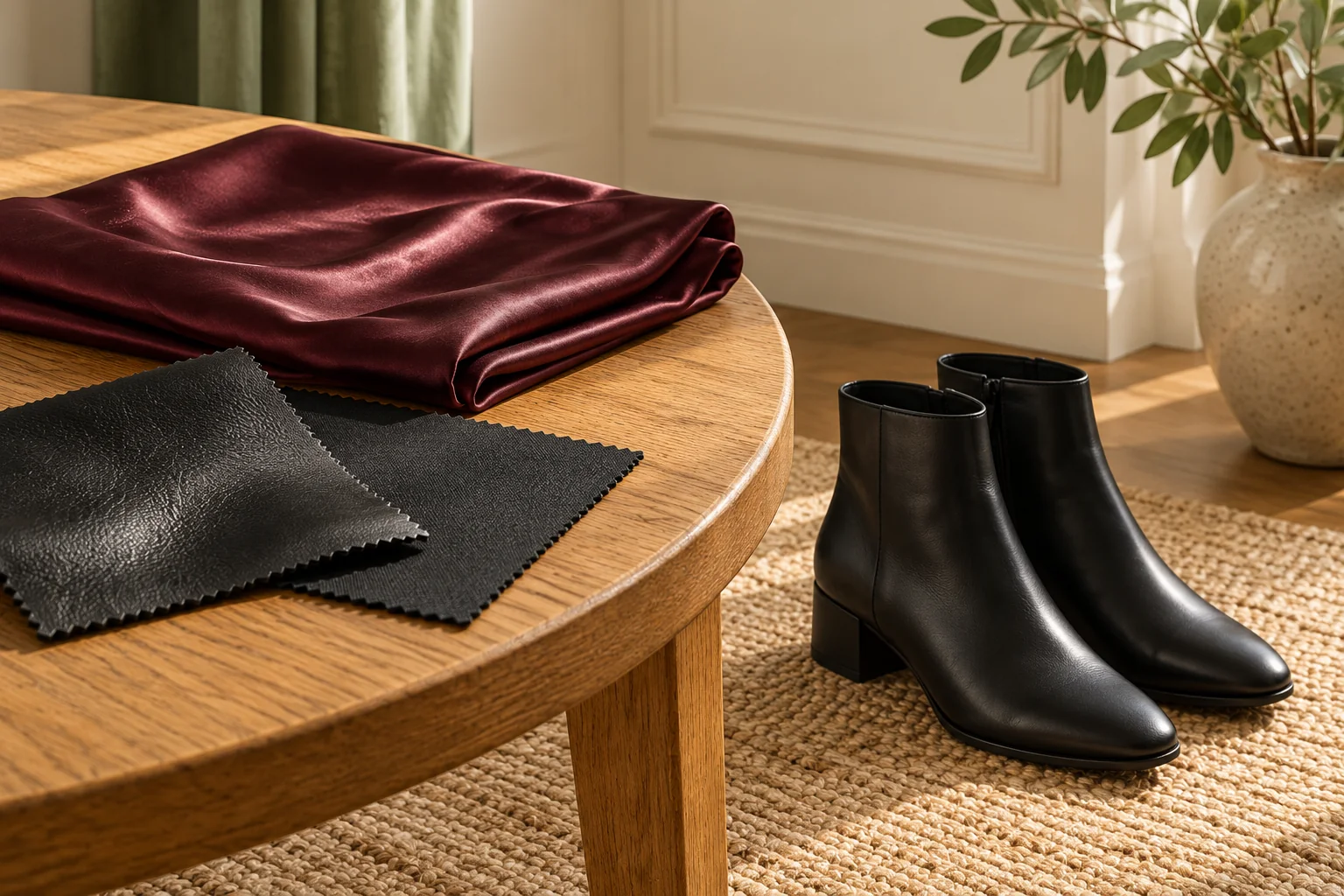
Latex is a rubber material; PVC and wetlook are not interchangeable descriptions. Ask whether a glossy item has a coated backing and what the full composition is. Wetlook describes an appearance, so obtain the actual fabric information. Leather comes in different finishes; its care cannot be inferred from colour. Leather UK notes that synthetic alternatives may contain PVC or polyurethane: ask about composition rather than assuming “vegan leather” identifies one material.
Choose footwear for comfortable walking and the actual journey, including standing, stairs and the route home. A high heel is not a requirement for a dominant role or a dress code unless an organiser explicitly specifies it. Compare the heels guide and consider a lower heel or a different outfit when balance or foot comfort is uncertain. NHS foot-pain information provides routes to assessment; a seller cannot assess a symptom.
Ask the garment maker whether a dressing aid is required, which type is permitted and whether it affects the finish or lining. Do not substitute household oils, cleaners or an intimate lubricant simply because something seems slippery. Treat an unclear instruction as a question to resolve before buying. Jewellery, sharp fastenings and awkward closures also merit attention when handling delicate clothing; choose practical details you can manage without rushing.
Read the current organiser’s dress code, including permitted materials and footwear, before spending money. Different events set different rules; being sold as fetish wear does not guarantee entry. The UK clubs and events guide explains how to check access, privacy and venue expectations. Ask the organiser about a comfortable accessible alternative if the published options do not suit you.
Plan transport, a cover-up if wanted and private storage without assuming an outfit must be displayed outside the event. Discuss photographs separately from clothing and attendance. A dress code does not grant anyone permission to touch, comment on or photograph you, and it does not require participation in a role. You can change your plans or leave when the experience does not feel right.
Keep the instructions for each garment and any care aid together. Check washing, drying, storage and permitted cleaning products before purchase. Leather UK advises identifying the leather type and using suitable care rather than household cleaning hacks; it also advises dust covers rather than plastic for stored leather clothing. A method intended for leather footwear does not automatically suit a leather garment.
For latex, PVC and coated fabrics, follow the specific maker’s instructions instead of transferring care advice between materials. Ask how to prevent unwanted contact between garments during storage and whether hanging or folding is recommended. Inspect for damaged seams, unreliable closures, peeling coatings or other deterioration. Stop wearing an item that no longer closes or removes reliably and ask about repair; appearance alone does not establish its condition.
Across England, Wales, Scotland and Northern Ireland, the Consumer Rights Act 2015 requires consumer goods to be of satisfactory quality, fit for an agreed purpose and as described. These provisions are in force, checked on legislation.gov.uk on 11 October 2026. Keep the size chart, description and seller’s answers. Faulty-goods rights are separate from whether a shop offers an optional change-of-mind policy.
The Consumer Contracts Regulations 2013 are also in force across those nations, checked on the same date. Distance-sale cancellation rights have exceptions, including certain made-to-specification goods and sealed goods unsuitable for return for hygiene reasons once unsealed. An adult-clothing label does not itself explain an exception. Check before removing seals, and read the UK returns guide. OPSS provides consumer product-safety advice and recall information.
Do dominatrix outfits have to include latex? No. The role does not prescribe a material. Choose something you can wear comfortably and remove easily.
Is wetlook the same as PVC? Not necessarily. Obtain the composition, backing and care instructions rather than buying by a finish description.
Can I use the same cleaner on leather and latex? Do not assume so. They are different materials with garment-specific instructions.
Do I need high heels for a fetish event? Check its current rules. Do not sacrifice comfortable walking to an assumption about the dress code.
Can I return an outfit that does not fit? Check the purchase terms and any applicable cancellation exception. A fault or inaccurate description raises a separate consumer-rights question.
Ask a GP about persistent skin symptoms or health concerns affecting clothing choices. A local NHS service can advise on allergy or foot symptoms; call 999 for a life-threatening emergency. For consumer problems, start with Citizens Advice in England and Wales, Advice Direct Scotland or Consumerline in Northern Ireland. For event access questions, contact the organiser directly before buying clothing.
Ask before buying
Evidence and limits
These sources support the category-level checks and signposting. They do not certify an individual product or turn general guidance into a safety guarantee.
Keep learning