
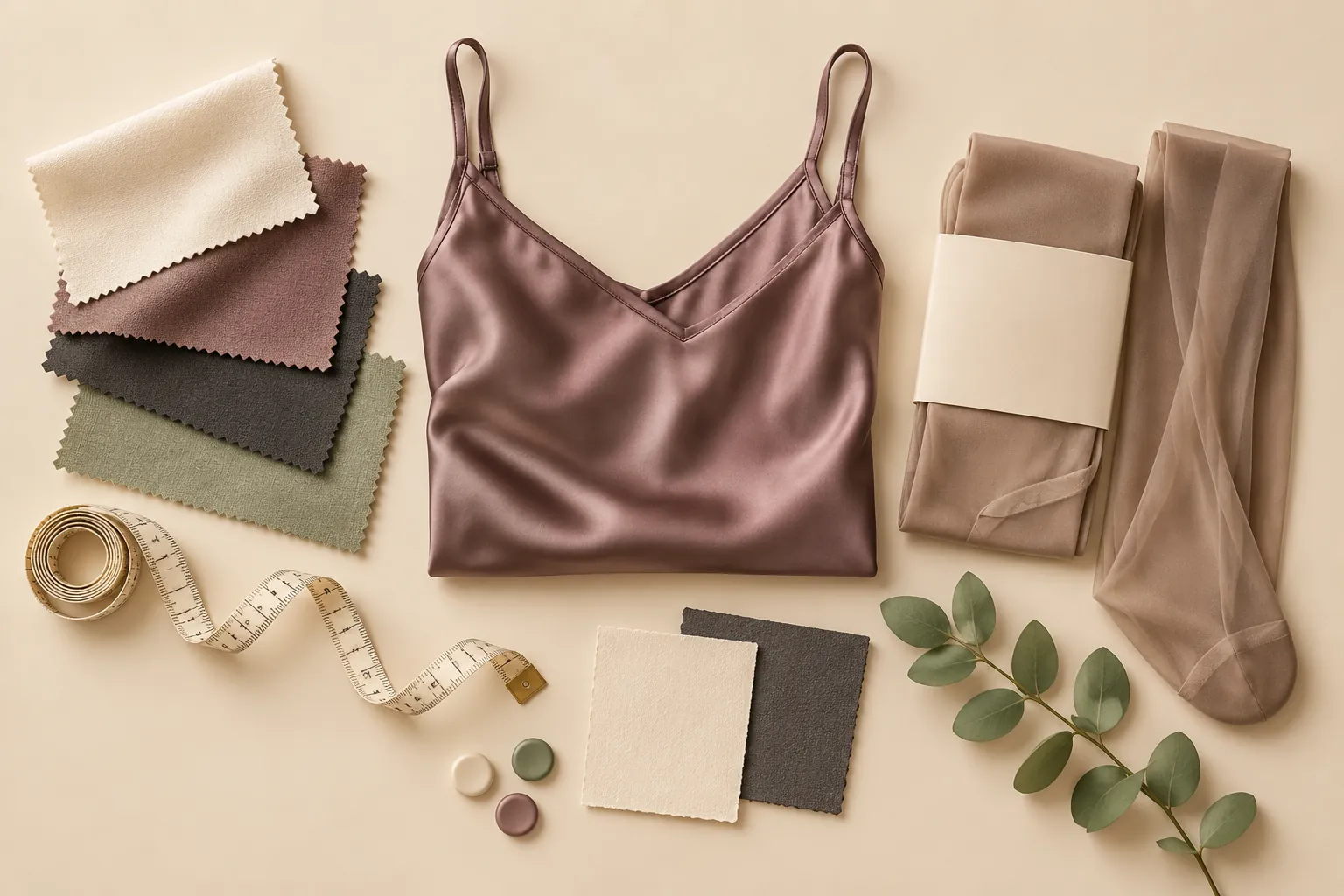
Choose clothing for the wearer's comfort, fit, privacy and budget. A feminine presentation has no required silhouette, fabric or size, and there is no need to tolerate pain for an outfit to “count.” Start with a garment the person actually wants, compare the maker's measurements with the body and plan how to change or clean the item. Lingerie and hosiery are optional parts of a much broader range of expression.
Build a wardrobe around the person
Ask what the wearer wants the clothes to do: feel soft, create a particular shape, suit an invented character, or work in daily life. A garment that looks appealing online can feel very different when standing, sitting or walking. Decide whether this is a private experiment or something the person wants to wear outside. Public comfort, climate, accessibility and storage matter as much as a photograph.
Begin with one or two pieces rather than purchasing a complete wardrobe. A top, scarf or skirt can be combined with familiar clothes. Make room for gender-neutral, masculine or mixed styling; “feminine” is not a single set of compulsory garments. A person may prefer colour and texture over a conventional silhouette. The wearer decides which look is meaningful, and a partner's preference does not override that choice.
For a limited budget, compare measurements, construction and care instructions before looking at labels aimed at a particular gender. A used item can be economical if it can be cleaned appropriately and inspected for wear. Set a spending limit in advance and consider whether alterations to an existing item would be more useful. Do not buy intimate clothing for someone as a surprise and then expect them to use it.
Sizing across bodies
Take the measurements specified by the retailer, not only a familiar dress or chest size. Brands vary and a size chart may describe the garment rather than the body. Check shoulder, chest, waist, hip and length as relevant. If a piece has little stretch, allow comfortable movement and breathing; if it has a tight elastic edge, look for pressure marks and whether it rolls or pinches.
A garment can fit one dimension and fail another. Separates, adjustable straps, stretch panels or a tailor's alteration may be more comfortable than trying to force a single-size outfit. If buying online, check returns and hygiene restrictions before removing tags. A size number is a retail convention, not a judgement about the body or the legitimacy of someone's presentation.
If someone has a disability, fatigue or limited hand movement, think about closures, dressing time and whether help is wanted. Magnetic or simpler fastenings may be easier for some people, while others prefer a garment they can remove without assistance. Disability and access explains why adjustments should be negotiated with the individual rather than assumed.
Lingerie, hosiery and skin comfort
Lingerie varies widely in shape and support. Check whether seams, straps and elastic sit comfortably and whether the fabric can be washed as instructed. Someone may enjoy the look but dislike the contact of lace or a tight band. Do not use compression as a shortcut to an imagined “correct” shape. Pain, numbness, overheating or restricted breathing means stop and change the item.
Hosiery needs attention to length, waistband, seam and temperature. A pair that repeatedly slides or constricts is a poor fit, even if the package lists the expected size. Keep nails and rough accessories away from fragile fibres, and wash according to the label. If a person has circulation, skin or mobility concerns, they should choose comfort first and seek clinical advice for unexplained symptoms.
Materials can cause irritation. Check fibre and dye information where available, wash new garments when the maker recommends it, and stop using an item that causes a reaction. A product marketed as “hypoallergenic” is not a guarantee for an individual's skin. The materials and skin contact guide explains why claims should be assessed against the actual product and contact.
Shoes and accessories
Footwear changes balance and the way someone moves. If trying heels, start with a stable shape, check the width and give the wearer a chance to walk in a safe ordinary setting. A high heel is not a requirement of femininity. Heels for beginners discusses comfort and mobility with NHS-linked foot-health information.
Accessories can be a lower-cost way to explore a look, but they still need practical thought. Earrings may need a suitable fastening, jewellery can snag fabric, and a wig can add heat. Put essential items such as keys and a phone somewhere accessible rather than letting a costume rule make them hard to reach. The participant can take off anything uncomfortable without asking permission.
Before taking photographs, ask whether the wearer wants any image and where it may be stored. An outfit may reveal an identity or interest to someone who sees a shared device. A private trial without a camera is a complete experience in its own right.
Care, storage and next choices
Follow each garment's label for washing and drying. Sort items by fabric and dye, and store them clean and dry. Lingerie, wigs and makeup tools have different care needs; do not assume one quick wipe treats all of them. Replace a piece that has lost elasticity, developed a rough seam or become hard to clean.
After wearing, ask what felt good in use, not just how the outfit looked. Did the fabric allow movement, did the size stay comfortable, and would the person choose it again? This gives a better basis for a future purchase than buying a larger set before testing one piece. A change of mind about presentation is ordinary and does not make the initial experiment a failure.
A fitting-room decision sequence
Start with the garment's measurements and the wearer's preferred fit. Check one dimension at a time: where the shoulder sits, whether the chest or waist pulls, whether the hem length suits movement, and whether the fabric feels tolerable against the skin. A mirror can help, but it should not replace comfort. Sit, stand and reach in a way the wearer normally would. A garment that only works in a fixed pose is a poor candidate for a longer event.
If the item is intimate clothing, discuss hygiene and returns before purchase. Some sellers exclude returns after a seal is opened, and used items may have limited information about their prior care. Decide whether a garment can be tried over another layer or whether measurements alone are the right first step. A partner should not pressure someone to remove a protective layer merely to prove a fit.
Consider laundry and storage as part of cost. A delicate piece that needs care neither person can provide may become an expensive one-use item. A simple washable option can be easier to repeat. If a garment is shared between looks, note which accessories or underlayers change the feel. A small wardrobe assembled around actual experience can be more useful than a large collection chosen from photographs.
Some fabric and colour choices bring social assumptions. The person may want an understated look rather than a stereotyped version of femininity. Ask what they feel themselves in. A partner's language can support that exploration by describing the chosen item and comfort rather than rating how convincingly someone matches an imagined gender standard.
If a garment fits the image but not the body
A size chart may suggest a garment should fit while a seam still digs into the skin. The actual experience is the deciding evidence for this person's use. Try a different cut, an adjustable style or a separate top and bottom. Do not pressure the wearer to tolerate a painful fit because returning the item is inconvenient. Keep labels and return conditions in mind before modifying a new piece.
A look may also fit physically but feel wrong emotionally. The participant might prefer a different colour, more coverage or a less stereotyped presentation. Ask what they want to keep from the experiment rather than offering a verdict that they looked “convincing.” A small accessory or familiar fabric can be a better expression than a full outfit someone wears to meet another person's expectation.
When planning for an event, test the outfit with the actual shoes, outer layer and bag. Can the wearer sit, reach keys and use the facilities comfortably? Is there a private place to change? A garment that meets those ordinary needs gives the wearer more freedom to focus on the event. Pack an alternative and agree that changing early does not require a reason.
Common questions
**Do I need lingerie for feminisation?** No. It is one option, and the wearer chooses whether it suits their body, privacy and goals.
**Should I size down for a closer silhouette?** Use measurements and comfort. A smaller label does not justify pain, numbness or restricted breathing.
**Can a partner select the clothes?** They may suggest items within an agreed range, while the wearer retains a real veto and control over cost and privacy.
**Are second-hand items suitable?** Check the material, wear, cleanliness and return conditions. Do not rely on a seller's broad safety description.
**What if I cannot wear heels?** A feminine presentation does not depend on heels. Choose a shoe that supports the wearer's mobility and comfort.
When to get help
For persistent skin irritation, pain or circulation symptoms, ask a pharmacist or GP; urgent symptoms need the appropriate NHS route. LGBT Foundation and Switchboard can support questions about expression without deciding what it means for identity. If a partner controls someone's clothing through threats or humiliation, Galop and domestic-abuse services may help. Definitions: feminisation, gender expression, lingerie, stockings and material sensitivity.