A uniform fetish is an adult interest in standardised clothing and the roles or qualities it represents, such as formality, service, authority, competence or belonging. The focus can be the garment, an imagined role or a negotiated adult performance.
 The UK Kink GuideEvidence-led glossary
 Back to the glossaryMaterials & dressIn plain English Words in context A non-graphic adult example What not to assume
Uniform fetish
Also known as fetish uniforms · uniform kink
An attraction to standardised dress and the roles, authority, belonging or transformation it represents. In consensual role-play, uniforms are symbolic costumes and do not confer real institutional power.
Start here
New to this term?
A real occupational uniform identifies a workplace role; uniform-inspired fashion borrows its visual language; adult costume role-play is a clearly fictional, consensual frame. These categories may look similar but carry very different responsibilities.
Two adults might agree to use an obviously fictional uniform-style costume to suggest formality or a temporary role. Another person may simply collect historical tailoring or wear work clothing without any erotic meaning.
A uniform never creates consent or transfers real authority. Fantasy does not show that someone wants deception, coercion or contact with workers in that profession. Research can describe symbolism and role-play, but cannot assign one motivation to all users; impersonation, public confusion, photography and workplace privacy remain separate real-world issues.
Sources and evidence type
Manual claim and limitation notes are shown where an individual source audit is complete. Other evidence-type labels are a publisher aid awaiting source-by-source confirmation.
Rehor (2015), survey of women from kink communitiesResearch study
- Source design
- Peer-reviewed research or review
- What it can support
- The specific population, measures and findings reported by the paper.
- Important limitation
- It cannot automatically establish UK prevalence, causation, diagnosis, consent or an individual outcome. Check recruitment, definitions and study design.
Dunkley & Brotto (2020), BDSM consent reviewResearch study
- Source design
- Peer-reviewed research or review
- What it can support
- The specific population, measures and findings reported by the paper.
- Important limitation
- It cannot automatically establish UK prevalence, causation, diagnosis, consent or an individual outcome. Check recruitment, definitions and study design.
V&A, Vivienne Westwood and uniform-derived fashionCommunity context
- Source design
- Contextual or community source
- What it can support
- Terminology, reported practice or community context within the source’s own setting.
- Important limitation
- Community usage is not universal and does not establish safety, prevalence, clinical benefit or legal permission.
Police Act 1996, section 90Law or regulator
- Source design
- Primary legislation, prosecutorial or regulator guidance
- What it can support
- The legal provision or official regulatory position for the jurisdiction and date stated.
- Important limitation
- It is not fact-specific legal advice. Commencement, amendments, jurisdiction and case law may affect application.
WHO ICD-11 clinical requirements (2024)Clinical guideline
- Source design
- Current public-health or clinical guidance
- What it can support
- Service pathways, health definitions and recommended public-health or clinical actions within its stated scope.
- Important limitation
- General guidance cannot assess an individual’s symptoms, exposure, medicine, contraindications or urgency.
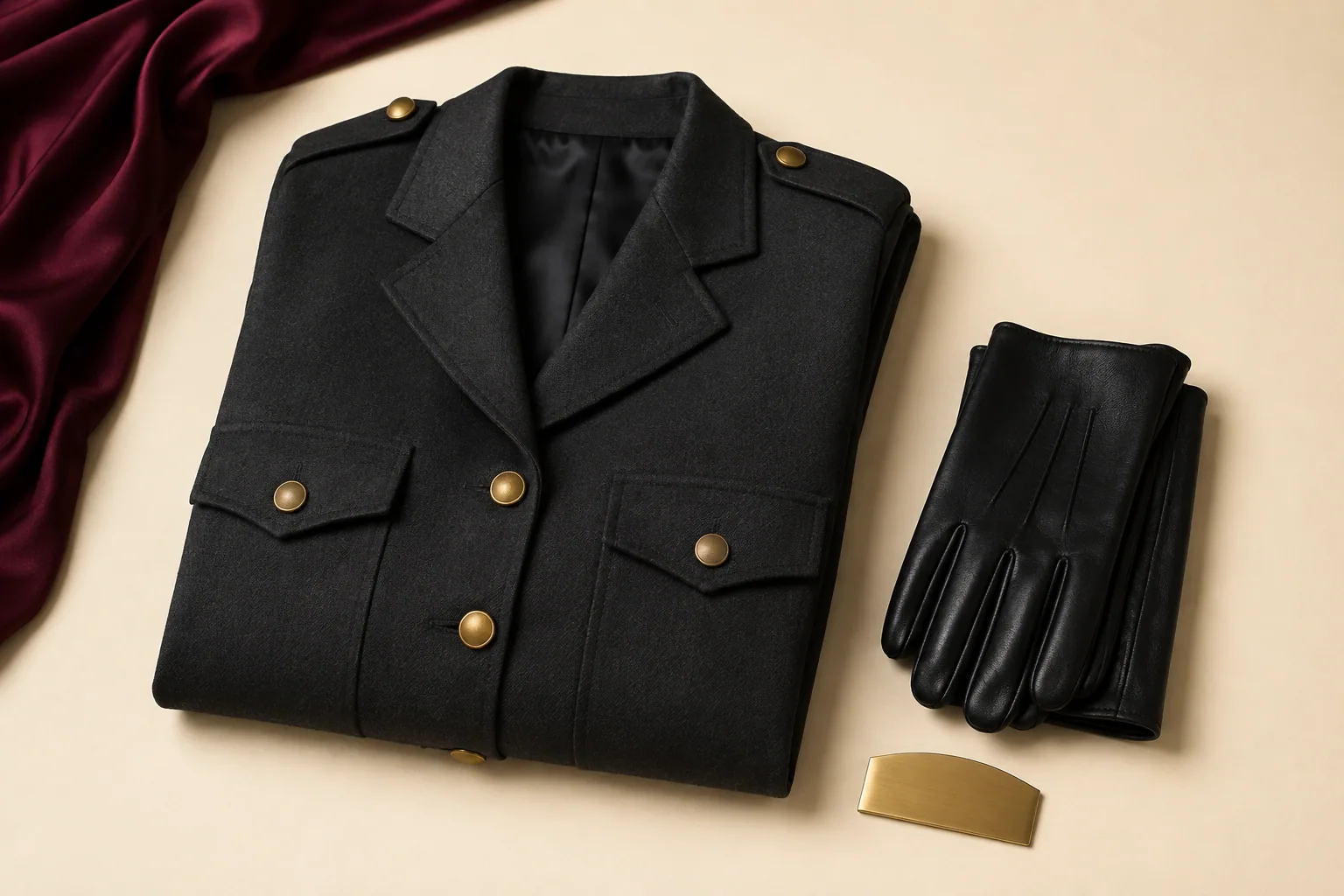
Materials & dress
Illustration created using generative AI; not documentary evidence.
In brief
Standardised dress can suggest a role without creating its powers.
A uniform fetish concerns standardised adult dress and the meanings attached to it: formality, competence, service, authority, belonging or transformation. The interest may focus on tailoring and insignia, on a fictional role, or on a negotiated power dynamic. A costume never grants real institutional authority and never supplies consent on behalf of its wearer.
Research and terminology
Direct representative research on uniform fetish is sparse. Broader studies place clothing, role-play and power exchange among diverse adult kink interests, but they do not justify a prevalence estimate or a single theory about authority, gender or personality.
Uniform, costume and role are different layers. Someone may value symmetry, fabric and repeated design without wanting role-play; another adult may use a non-official costume to mark a temporary script. Neither preference reveals a person's occupation or conduct.
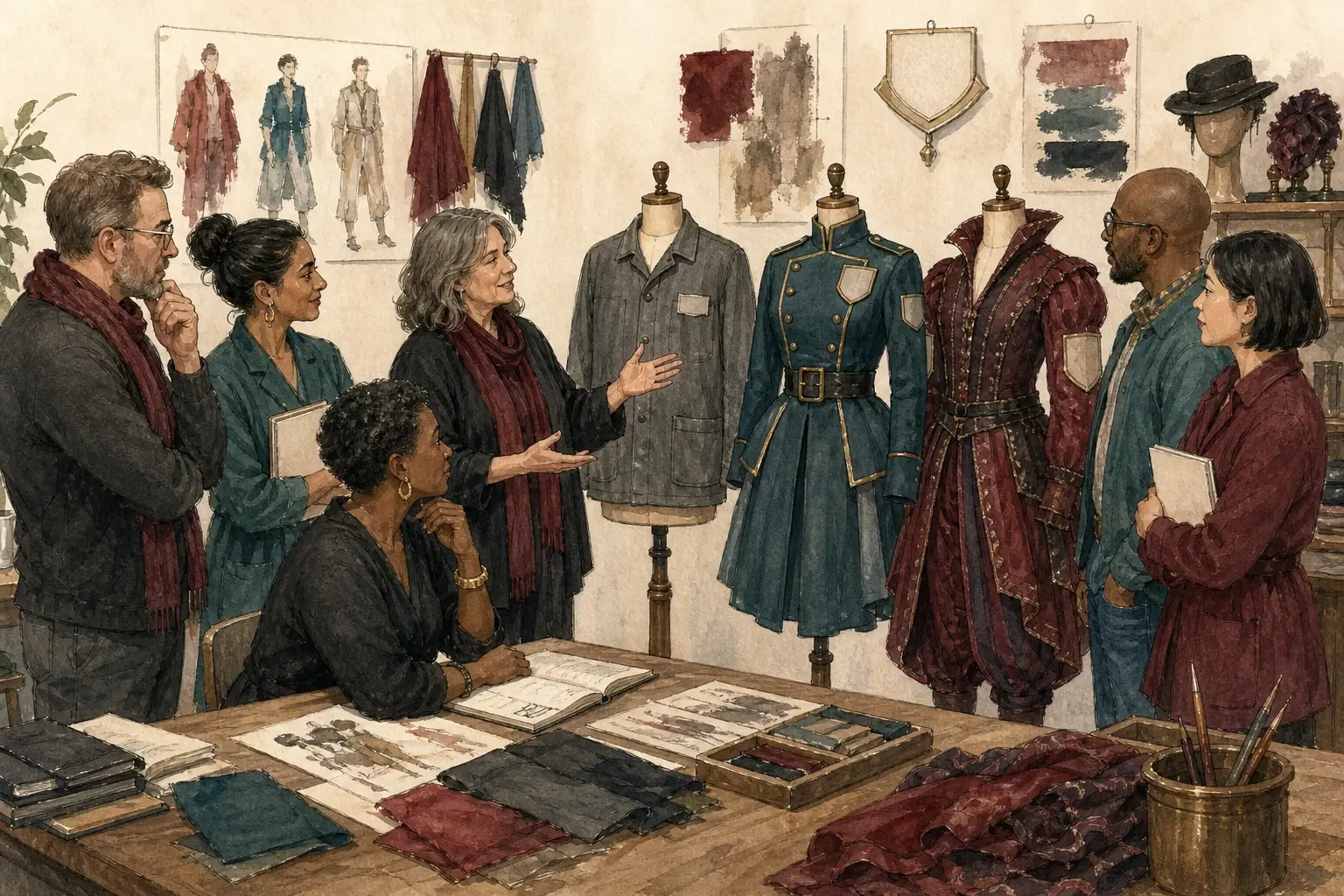
Direct uniform-specific evidence is sparse. Standardised dress may be practical clothing, fashion, costume or a negotiated symbol, and none of those uses reveals a person's conduct.
Illustration created using generative AI; not documentary evidence.- Status
- Detailed editorial draft
- Publisher
- The UK Kink Guide
- Reviewed
- Structured draft present; individual review date not recorded
- Evidence
- 5 cited sources · types labelled below
- Jurisdiction
- UK-focused general education
Read the rest: evidence, law, safety and sources
Real work clothing governed by an employer, profession or service; people wearing it at work are not participating in role-play.
Dress borrowing colour, tailoring or insignia without claiming to be official.
A clearly fictional, negotiated performance between adults.
Using apparent authority to deceive, intimidate or obtain compliance is not consensual uniform play.
Garments, insignia and transformation
Relevant objects may include an adult-sized jacket, tailored shirt, apron, cap, gloves, boots, belt, blank name badge or fictional insignia. Colour, pressed fabric, polished surfaces, repetition and the act of dressing may convey order, care or transformation.
Military, police, medical, hospitality and service-inspired designs carry different histories and public meanings. Symbols are not interchangeable, and genuine insignia can cause confusion. Clearly fictional styling helps preserve the boundary between costume and an actual public role.
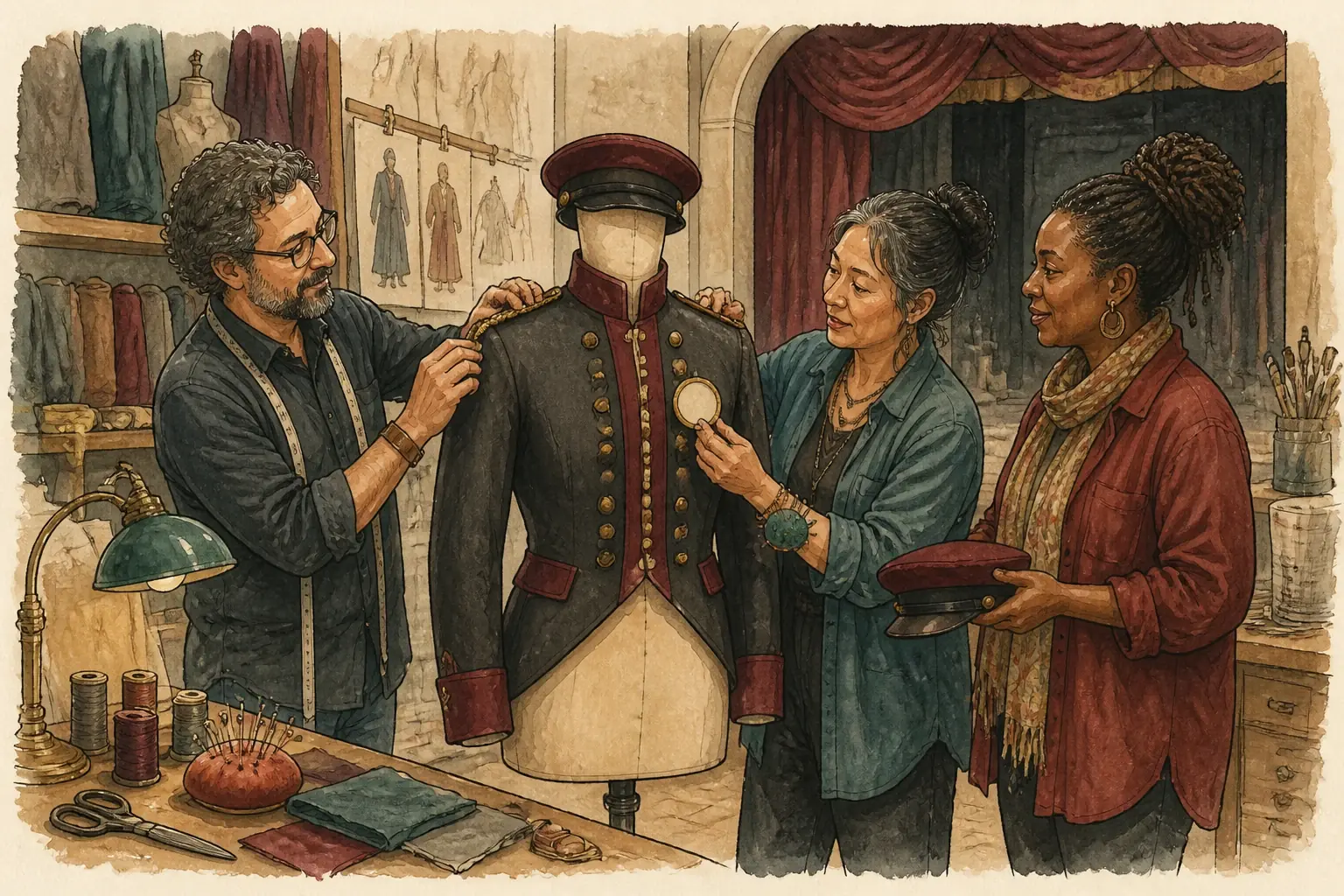
Real insignia and occupational clothing carry public meanings. Generic styling and blank identifiers help separate an agreed adult performance from actual institutional authority.
Illustration created using generative AI; not documentary evidence.Consent, workplaces and bystanders
An adult role-play requires agreement about the role, language, location, photography and when the performance ends. A title such as officer, clinician or servant does not create consent, professional power, legal authority or an obligation to obey.
Workers and members of the public do not become participants because their ordinary clothing is attractive to someone. Secret photography, sexual comments at work or using apparent authority to pressure a person are outside consensual kink.
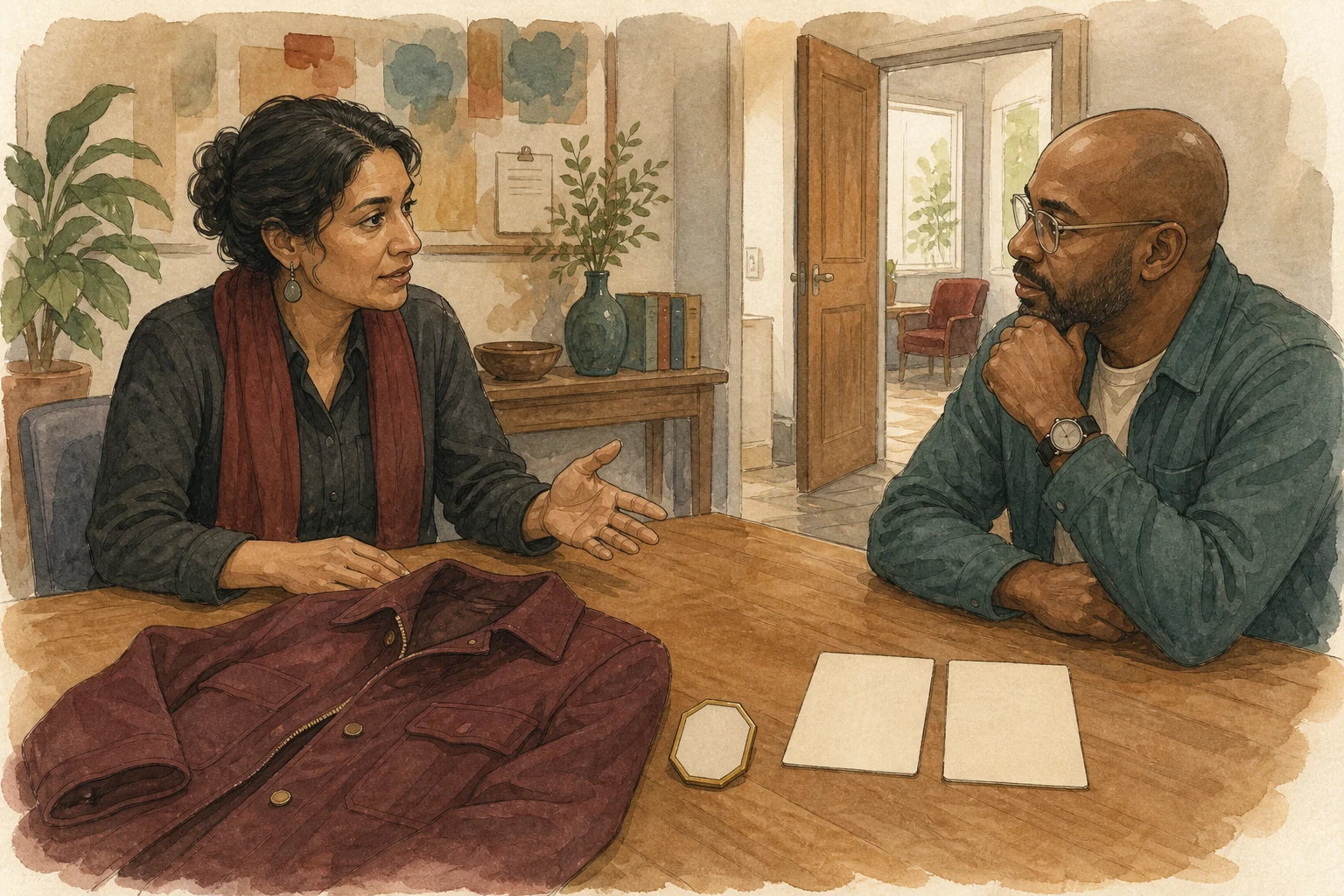
Roles, language, location and photography require agreement, and the performance ends when either adult withdraws. Workers and bystanders remain outside the script.
Illustration created using generative AI; not documentary evidence.Clinical and legal distinction
WHO guidance does not classify consensual adult costume or clothing interests as disorders simply because they are unusual. Relevant clinical concerns are distress, impairment, serious risk and non-consent, not the presence of a uniform in a wardrobe.
Section 90 of the Police Act 1996 addresses impersonating a police officer and certain deceptive uses of police uniform in England and Wales. Other uniforms and UK jurisdictions have their own rules; fictional role-play should not be used to mislead the public.
Non-graphic examples
What the umbrella may include
- Collecting adult-sized uniform-inspired jackets for tailoring and visual symmetry.
- Using a fictional cap and blank badge as agreed cues for a private role-play.
- Enjoying an apron or formal service outfit for its association with care and ritual.
- Choosing clearly invented insignia rather than copying a real worker's identity.
- Ending the role when either adult asks, regardless of rank used in the script.
Prepare for an appointment
Questions you could ask a professional
- What information would help you understand my question?
- What are the realistic options and uncertainties?
- How can disability, communication or privacy needs be accommodated?
- When should the situation be reviewed again?
These prompts do not replace assessment and do not imply that every reader needs professional care.
Continue learning
Take the next step from definition to context.
Continue with independent guidance connecting uniform fetish to evidence, consent, safety, uncertainty and practical decisions.
Adult roleplay costumes and uniforms: compare fit, fabrics, fastenings, care and photo privacy without assuming clothing means consent.
Read the full guideRelated in-depth reading
Read the full guide.
Explore a connected question with context and UK support routes.
Heels for beginners: compare fit, heel shape, support and comfort, recognise foot pain and know when to seek NHS or podiatry advice.
Read the full guide