A bondage scenario in which an adult participant's movement changes strain, position or another agreed sensation, creating a staged choice between discomforts or tasks.
Sources and evidence type
Manual claim and limitation notes are shown where an individual source audit is complete. Other evidence-type labels are a publisher aid awaiting source-by-source confirmation.
HSE: slips and trips guidanceLaw or regulator
Source design
Primary legislation, prosecutorial or regulator guidance
What it can support
The legal provision or official regulatory position for the jurisdiction and date stated.
Important limitation
It is not fact-specific legal advice. Commencement, amendments, jurisdiction and case law may affect application.
The specific population, measures and findings reported by the paper.
Important limitation
It cannot automatically establish UK prevalence, causation, diagnosis, consent or an individual outcome. Check recruitment, definitions and study design.
The specific population, measures and findings reported by the paper.
Important limitation
It cannot automatically establish UK prevalence, causation, diagnosis, consent or an individual outcome. Check recruitment, definitions and study design.
Illustration created using generative AI; not documentary evidence.
In brief
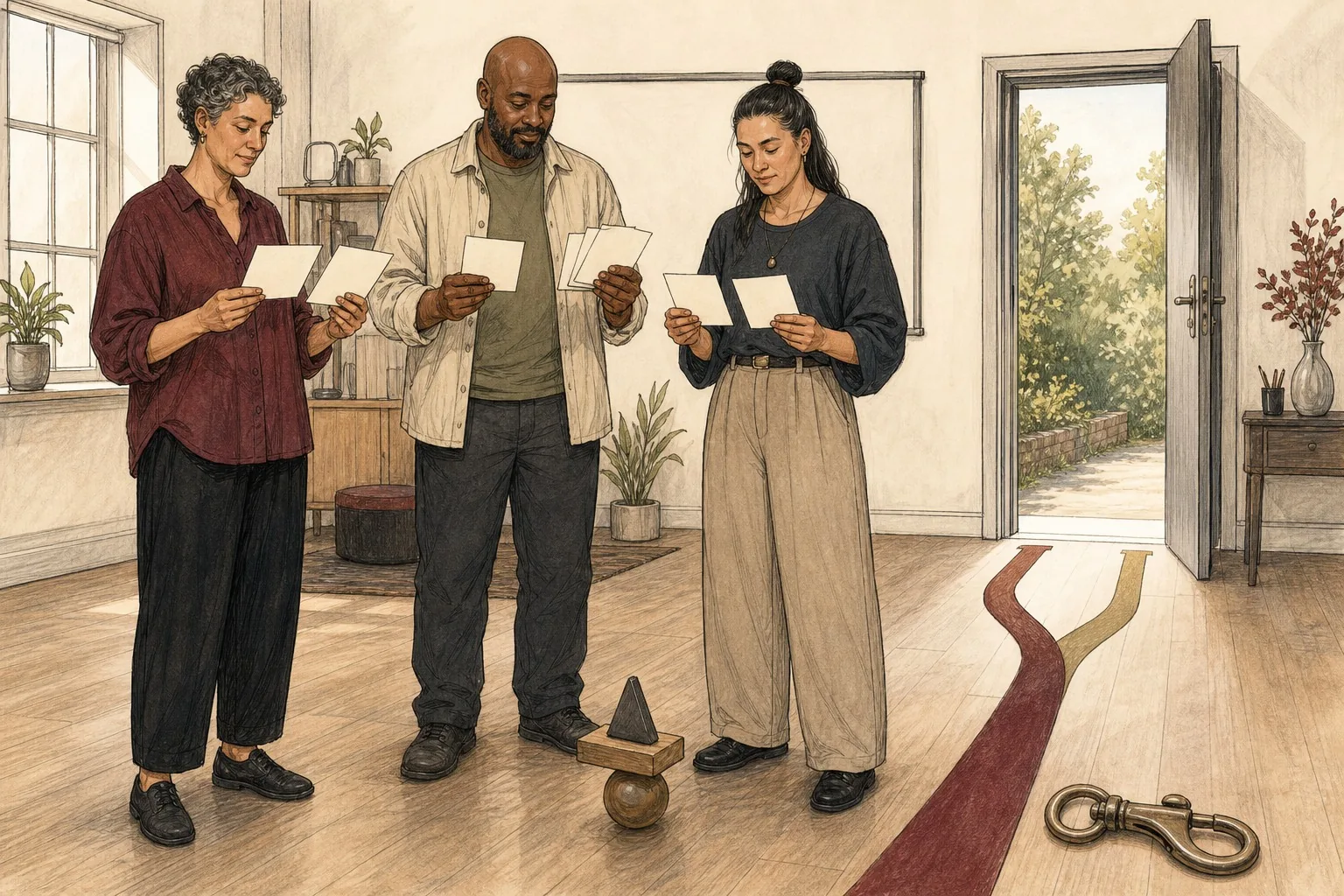
A fictional dilemma must always have a real, unconditional exit.
Predicament bondage uses fatigue, balance or changing tension as part of the psychological experience. The apparent choice exists inside a pre-negotiated frame; it does not remove the right to stop the whole activity. Because fatigue and small movements can rapidly alter forces, a setup that initially seems manageable may become unstable, painful or impossible to exit.
Consent and the real exit
Agree the fictional choices, duration, physical limits and a stop signal that ends every consequence. Do not make safeword use itself punishable.
Check whether pain, balance, fatigue or communication difficulties could prevent signalling. The supervising person must stop on uncertainty, not wait for perfect wording.
EDITORIAL ILLUSTRATIONThe real exit ends the whole dilemma
Fictional choices exist only inside a specific agreement. A stop signal ends every consequence, and uncertainty, freezing or impaired communication is a reason to pause immediately.
Illustration created using generative AI; not documentary evidence.
Status
Detailed editorial draft
Publisher
The UK Kink Guide
Reviewed
Structured draft present; individual review date not recorded
Evidence
3 cited sources · types labelled below
Jurisdiction
UK-focused general education
Read the rest: evidence, law, safety and sources
Predicament bondage
A dynamic restraint in which movement changes the participant's challenge or sensation.
Static bondage
Restraint intended to remain relatively unchanged, though pressure and circulation can still change over time.
Endurance challenge
A time- or effort-based activity that may occur without restraint but still requires stop criteria.
Coercion
Pressure that removes free choice; a kink label does not make threats or non-consensual consequences acceptable.
Fatigue, joints and nerves
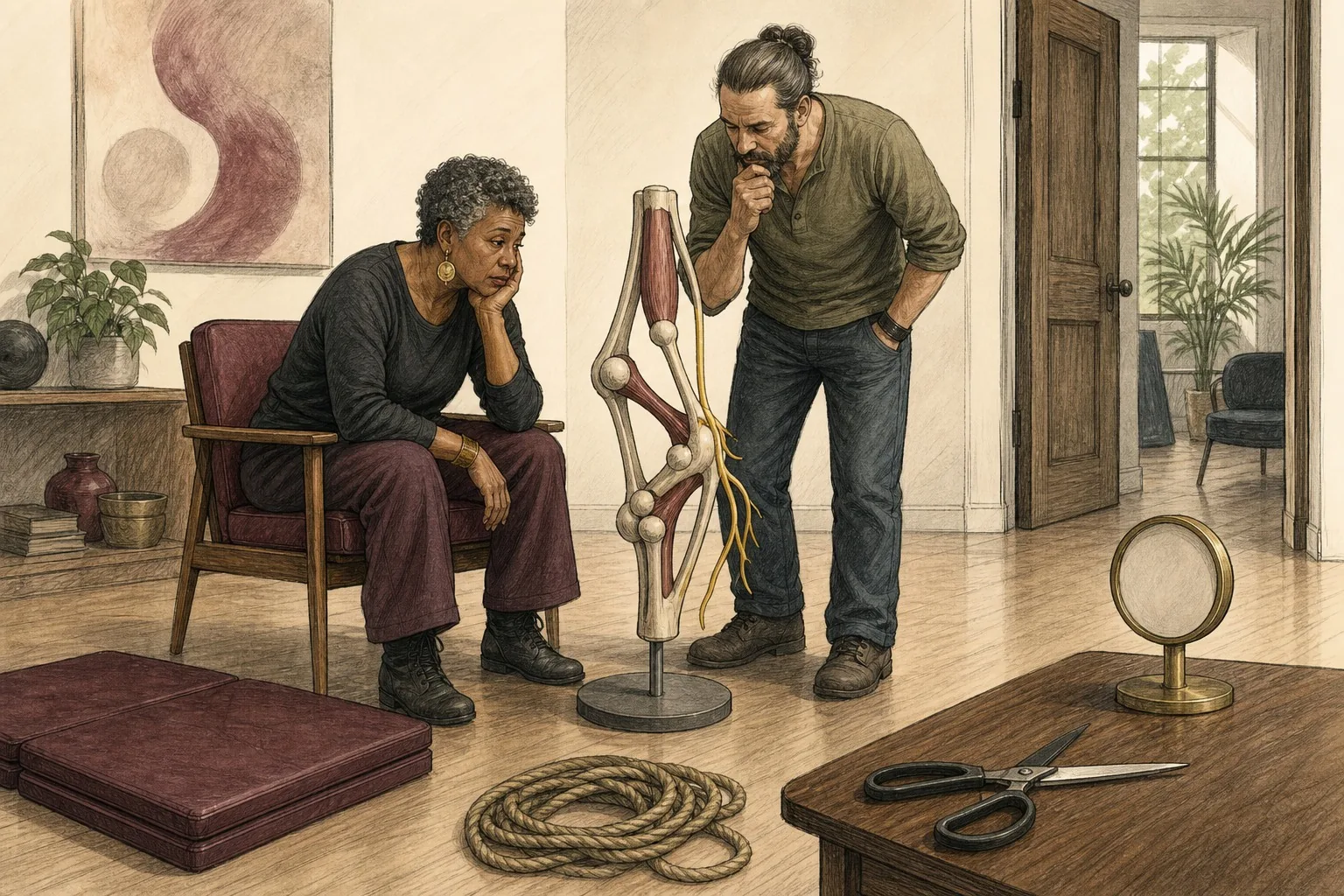
Muscle fatigue can change posture and load suddenly. Avoid locked joints, forced range, neck loading and positions where collapse transfers force to a small area.
Release immediately for numbness, tingling, burning, weakness, colour or temperature change, severe cramp or unexpected pain. Persistent neurological symptoms need medical assessment.
EDITORIAL ILLUSTRATIONFatigue can change the system quickly
Muscle fatigue can shift posture and load without warning. Numbness, tingling, burning, weakness, colour change or unexpected pain call for immediate release and appropriate assessment.
Illustration created using generative AI; not documentary evidence.
Falls and environment
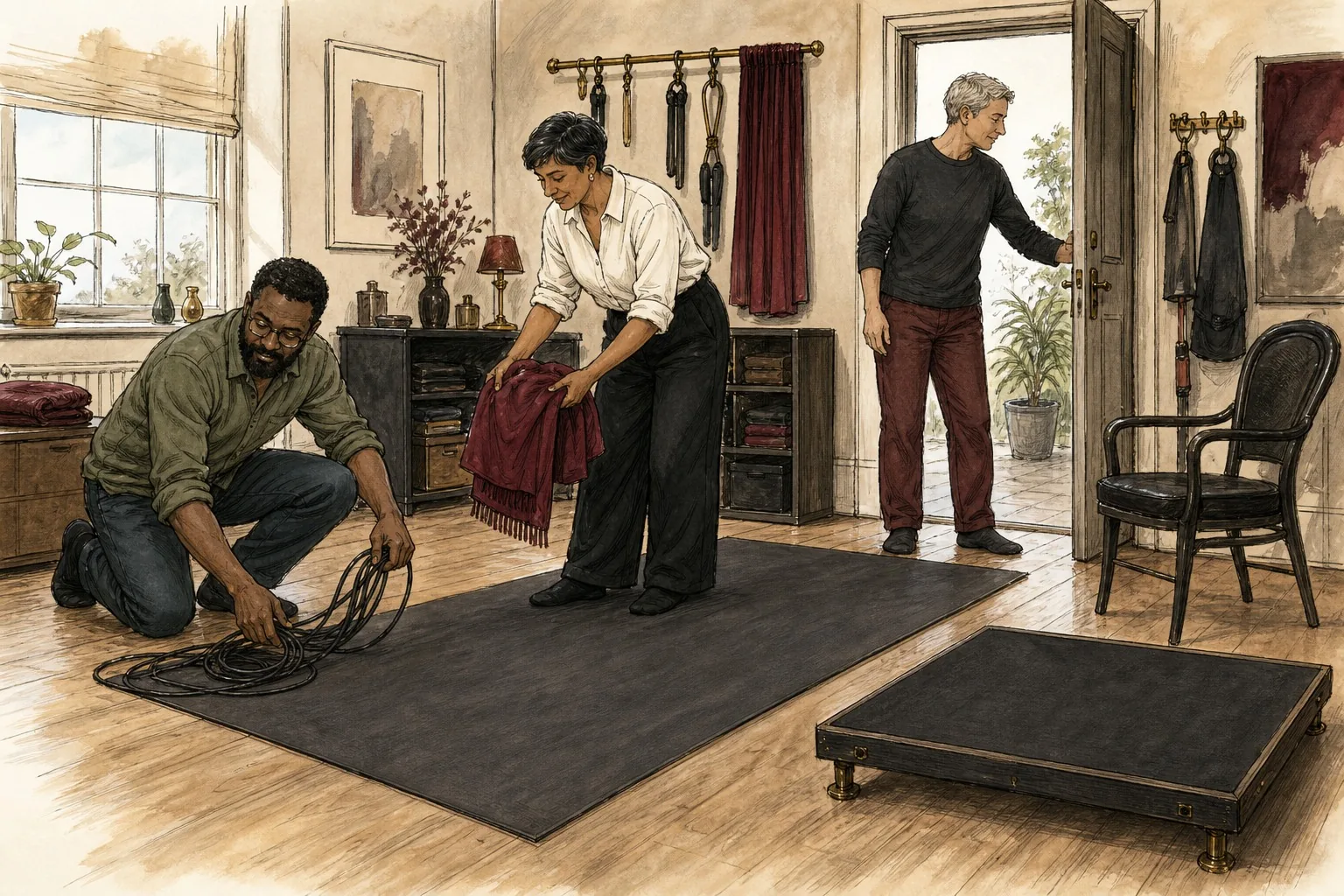
Keep fall distance minimal, remove sharp or hot objects and account for slippery floors, furniture and entanglement. A blindfold or unstable footwear can compound balance risk.
Never design the challenge so rescuers must lift an unconscious person's full weight before release. Maintain a clear route for emergency help.
EDITORIAL ILLUSTRATIONRemove the fall before adding challenge
Restricted sight, unstable footing, entanglement and nearby objects can compound balance risk. Keep the floor clear, minimise fall distance and preserve an unobstructed route for help.
Illustration created using generative AI; not documentary evidence.
Competence and evidence
Predicament systems can produce changing multi-directional forces that simple component ratings do not describe. Avoid suspension or structural anchors without specialist competence.
Direct empirical evidence is scarce. General biomechanics and restraint principles support caution but cannot define a universally safe configuration or duration.
Non-graphic examples
What the umbrella may include
Keeping the participant close to a padded floor.
Using a signal that ends the entire dilemma.
Stopping when muscle tremor changes posture.
Removing blindfold and unstable footwear from a balance challenge.
Choosing a verbal puzzle instead of escalating physical strain.
Prepare for an appointment
Questions you could ask a professional
What information would help you understand my question?
What are the realistic options and uncertainties?
How can disability, communication or privacy needs be accommodated?
When should the situation be reviewed again?
These prompts do not replace assessment and do not imply that every reader needs professional care.
Continue learning
Take the next step from definition to context.
Continue with independent guidance connecting predicament bondage to evidence, consent, safety, uncertainty and practical decisions.