Mattress
Check actual width, length and depth against the maker’s specification.
 The UK Kink GuideIndependent product discovery
Product discovery / Restraints and accessories
Under-bed restraints explained through mattress fit, strap lengths, cuff padding and release, with circulation warnings and UK buying rights. This guide names no preferred company or individual product.
Independent education · optional affiliate linksAn optional Uberkinky category box below is clearly disclosed and separate from the guidance. It is not a product recommendation. No on-site affiliate tracking is added. This is publisher-reviewed category education; no external approval or individual-product certification is claimed.
Start here
Choose verifiable fit and accessible release, and decline equipment that leaves safety questions unanswered.
Buying checklist
Check actual width, length and depth against the maker’s specification.
Ask for usable lengths and the permitted adjustment range.
Check circumference, padding, seams and skin-contact materials.
Identify every release point and whether it stays accessible.
Inspect webbing, stitching and clips before considering use.
Keep the instructions, trader details and replacement route.
Compare approaches
Compare flexibility and washable parts.
Check: Closure, seams and the maker’s cleaning method.
May feel different against the skin.
Check: Padding does not remove pressure or nerve risks.
Allow component-by-component comparison.
Check: Written compatibility and independent release.
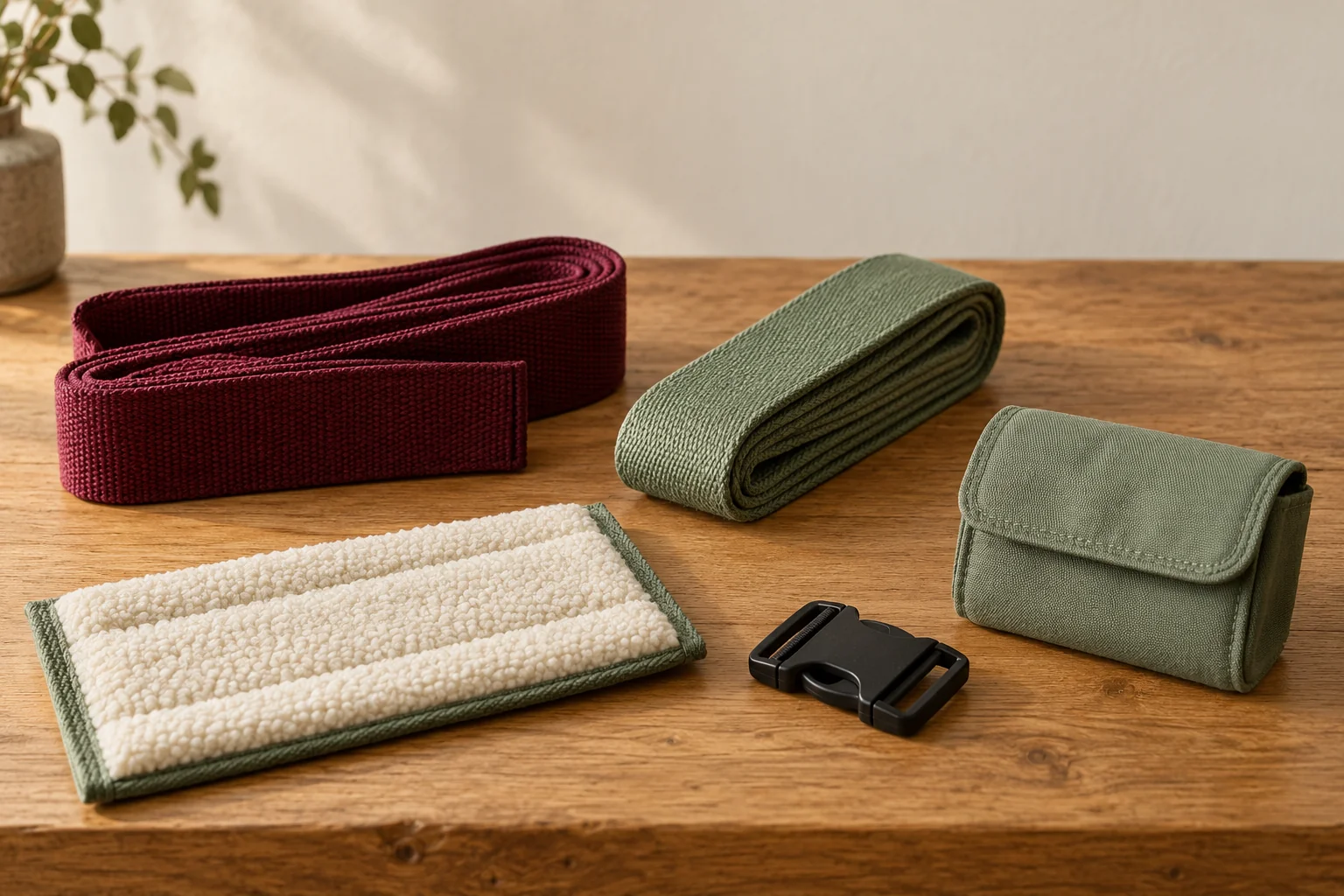
Choose an under-bed restraint system by matching its documented mattress range, strap adjustment and cuff measurements to the actual bed and adults involved. Accessible release and understandable instructions matter more than the number of attachments. A compact package or a padded cuff does not establish safety.
This guide is for adults aged 18 and over and concerns buying decisions, consent and warning signs. It provides no assembly or restraint technique. Compare beginner bondage kits before assuming a complete system is necessary; choosing no equipment is a valid decision. A purchase never commits anyone to being restrained.
The category may interest adults who want removable equipment rather than permanent furniture fittings. Suitability still depends on mobility, sensation, communication and a freely agreed stopping arrangement. Discuss who can operate the closures, recognise discomfort and call for help. A person who cannot readily reach or understand a release needs particular consideration; another person’s confidence does not resolve an access barrier.
Seek individual advice from a GP or relevant clinician before considering restraint if there is reduced sensation, poor circulation, fragile skin, significant joint difficulty or an existing injury. North Tees NHS identifies reduced mobility, circulation problems and reduced feeling as pressure-damage risks. That guidance explains a health concern, rather than endorsing adult equipment. Decline anything that conflicts with clinical advice or depends on discomfort being ignored.
Measure mattress width, length and depth and ask the maker which dimensions its system supports. Labels such as double or king are insufficient without numbers, especially with unusual mattresses, toppers or imported furniture. Obtain usable strap lengths and adjustment ranges, not just the longest loose piece in the package. This is a specification check, not an instruction to route or tension straps.
Cuffs need their own minimum and maximum circumference, closure type and material description. Compare padding thickness, seams, edging and how adjustment is retained. Softness does not rule out concentrated pressure. The cuffs glossary and wearable-restraint guide explain why photographs cannot establish fit. There is no universal finger-width rule or fixed duration that makes all cuffs safe.
Ask whether webbing, padding and contact layers are separately identified and whether replacement parts are compatible. Metal clips and rings require inspection alongside fabric. Do not substitute unrelated buckles or cuffs because they appear to fit: written manufacturer compatibility matters. If a seller cannot explain the materials or adjustment limits, choose a different specification or postpone buying.
Read the maker’s release information before purchase. Identify whether every cuff has an accessible opening and whether clips can become inaccessible against bedding. The term quick release describes a feature, not a guarantee that release works in every condition. Ask the maker what to do about a stuck closure and decline equipment with unclear answers. Never leave a restrained person unattended, including for a short interruption.
Keep suitable safety shears within immediate reach as a backup, following the manufacturer’s general safety advice. Their presence does not replace accessible normal release or supervision. This guide does not teach emergency cutting. Read restraint planning and emergency release for consent, readiness and reasons to stop, without improvising a rescue procedure.
Stop and release at pain, numbness, tingling, unusual coldness or colour change; do not wait for a planned check-in. NHS guidance explains that pressure can interrupt the nerve blood supply and cause pins and needles. Check-ins support communication but cannot certify safety, and someone need not prove a symptom before stopping. Padding and enthusiastic consent do not prevent injury.
Follow the maker’s instructions for each component. A washable fabric cuff does not establish that its padding, clips or attached webbing can be soaked or machine washed. Confirm permitted cleaners and drying methods before buying. Separate incompatible care requirements rather than applying a single strong cleaner to everything. Let cleaned parts dry fully before putting them away.
Store clean, dry equipment where sunlight, damp and accidental damage are avoided. Inspect fraying, stretched fabric, loose stitching, cracks, corrosion and unreliable closures. Withdraw damaged equipment and seek approved replacement parts; a home repair may conceal a safety-critical weakness. Replacement is based on condition and the maker’s instructions, not a promise that equipment lasts a particular number of uses. Keep the original specification so later checks are meaningful.
In England, Wales, Scotland and Northern Ireland, the Consumer Rights Act 2015 requires satisfactory quality and goods as described. Fitness for a particular purpose also applies where the purpose is made known to the trader and reliance is reasonable. These provisions are in force, checked on legislation.gov.uk on 10 October 2026. Save the advertised measurements, written answers and receipt; a warranty does not replace statutory rights.
The Consumer Contracts Regulations 2013 are UK-wide and in force on the same checked date. Regulation 28(3)(a) excludes cancellation for sealed goods unsuitable for return for health-protection or hygiene reasons once unsealed, rather than all adult goods automatically. Check what is sealed before opening. Faulty or misdescribed goods retain applicable remedies. The returns-rights guide explains the distinction.
Will any system fit a king-size mattress? No. Confirm actual dimensions and the maker’s supported range, including depth.
Are padded cuffs always safe? No. Padding cannot eliminate pressure, circulation problems or nerve injury.
Is quick release enough on its own? No. Accessibility, condition, supervision and clear instructions still matter.
Can someone be left restrained briefly? No. Never leave a restrained person unattended.
What should happen if tingling starts? Stop and release immediately. Persistent or recurrent symptoms need clinical assessment.
NHS advice directs blue or grey hands or feet to urgent assessment through 111; sudden blue or grey lips, tongue or face, breathing difficulty or chest pain require 999. Ongoing or recurrent pins and needles should be discussed with a GP. OPSS lists Citizens Advice in England and Wales, Advice Direct Scotland and Northern Ireland district councils for unsafe-product reports. See UK help for further routes.
Ask before buying
Evidence and limits
These sources support the category-level checks and signposting. They do not certify an individual product or turn general guidance into a safety guarantee.
Keep learning