
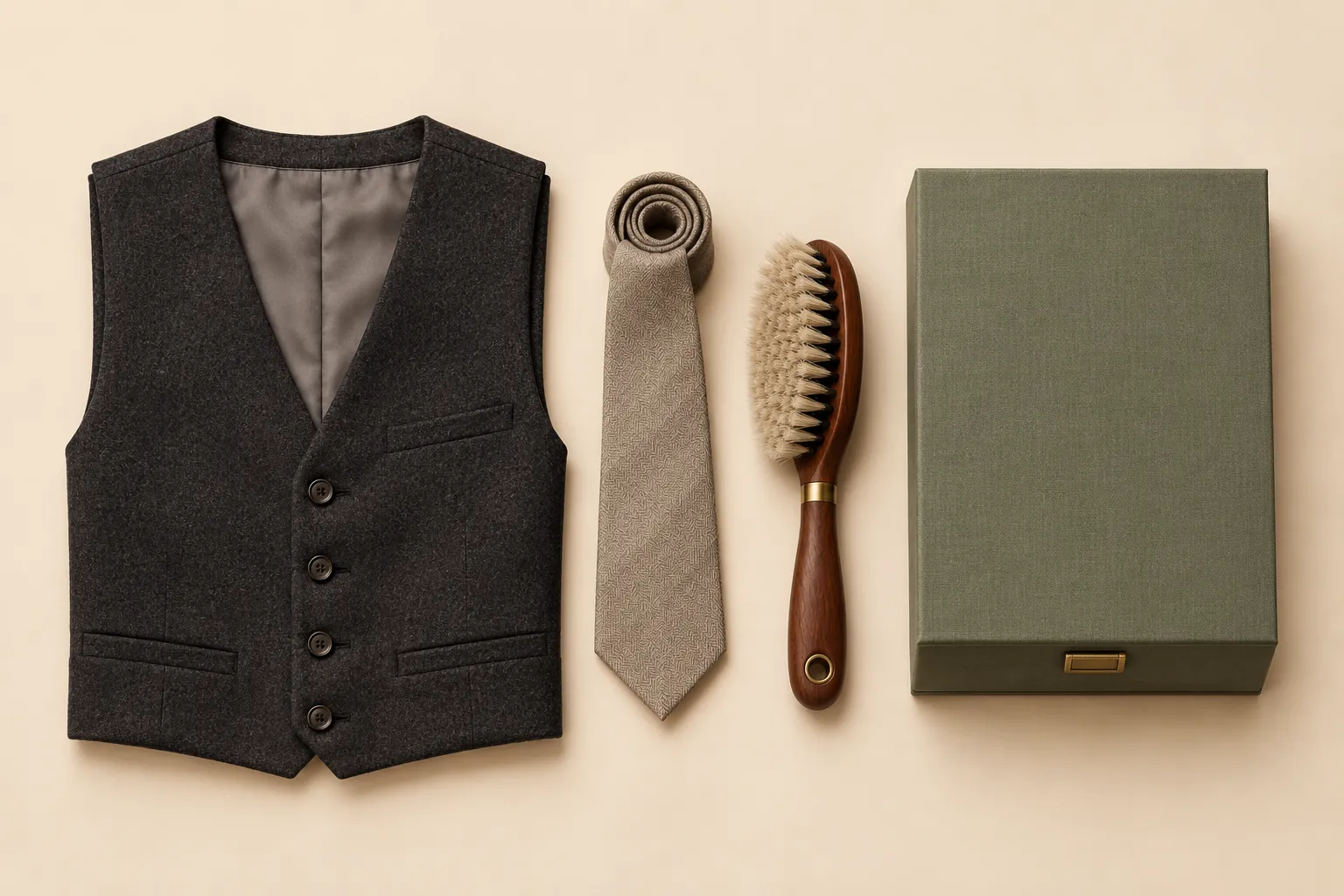
A costume can mark a fictional adult role without deciding what anyone else may do. Choose garments for fit, mobility and the wearer's comfort, agree where they may be seen, and follow the care instructions for each material. Buying an outfit is a separate decision from agreeing to a roleplay, a photograph or a public display.
Choose the role before buying the outfit
A formal shirt, waistcoat, tie, service jacket or imagined organisation's insignia can suggest an adult workplace or fantasy-world character. Decide what visual cues matter and whether ordinary clothing already does the job. The person wearing the outfit chooses its style and can remove it whenever they want. A garment should not become a test of commitment to another person's fantasy.
Consider practical details: room temperature, ability to sit and move, neck and wrist comfort, shoes, closures and whether an item can be taken off without help. A tie or tight collar can be uncomfortable even if it looks right; loosen or remove it for discomfort rather than insisting that appearance takes priority. Keep a change of clothes available if the wearer wants one afterwards.
Avoid using authentic insignia that could confuse bystanders or imply real authority. A wholly invented emblem or an unmarked garment often conveys the intended fiction without drawing unaware people into it. Discuss the setting and audience before leaving a private space. Someone's willingness to wear an outfit at home does not imply willingness to be seen in it by neighbours, friends or an employer.
Separate garments from consent
Agree the permitted role, words, touch and photographs as distinct choices. A person might want to dress up but not be addressed by a title, or might enjoy a formal title without a costume. If a particular garment has personal or cultural significance, ask how its use feels rather than assuming it is just a prop. Do not treat discomfort about one item as permission to substitute a different item without checking.
If clothing restricts movement, raises heat or causes tingling, pressure or a skin reaction, stop and adjust. A costume should not prevent someone from communicating or leaving the setting. Watch for ill-fitting footwear, slipping fabric, loose accessories and fastenings that snag. For material sensitivity, the clothing and material guide describes how fit and surface contact affect comfort.
A roleplay may include a short rule about where a garment is worn, but everyday access to one's clothes must remain with the wearer. Nobody should use a costume agreement to control what a partner wears to work, in public or around family. The distinction belongs in any authority roleplay negotiation, particularly if the participants have different privacy needs.
Cleaning, storage and sharing
Read the care label for each item. Separate pieces that need different wash temperatures or cleaning methods. Metal accessories, dyes, delicate trim and adhesives may need different treatment from the base fabric. Spot cleaning a costume that needs a full wash will not solve a hygiene issue; conversely, soaking a delicate piece can damage it. Check the maker's instructions rather than treating all costumes alike.
Allow items to dry completely before storing them. A breathable garment bag, clean box or shelf can protect pieces from dust and unwanted disclosure. Keep sharp fasteners away from delicate fabrics, and avoid storing makeup or wet textiles against items that could stain. If an item is shared, discuss cleaning and skin contact first; someone may reasonably prefer to use their own garment.
Inspect closures and seams before reuse. Replace an item that has torn around a load-bearing fastening or developed a rough edge against skin. The site's cleaning and cross-contamination guide explains why care instructions and the actual contact surfaces matter more than a generic label such as “easy clean.”
Privacy and photography
Ask separately before any photograph, even if a person agreed to wear an outfit. Discuss framing, faces, distinctive marks, location clues, storage, cloud backup and who can view the image. “Private” is not a technical setting: shared albums, linked devices and message previews can expose a file. The digital consent guide covers permission, retention and removal in more detail.
A person may consent to a picture being taken but not to it being sent to someone else. Agree whether the file is kept, for how long, and how someone can later request deletion. Do not use images or the risk of outing as leverage in a disagreement. If a photo has been shared without consent, follow the site's reporting guide for UK support routes.
Before a public event, read its dress code and accessibility information and decide what you are comfortable carrying or wearing on the journey. A venue's rules do not replace personal consent. A separate bag and ordinary outer clothing may make travel simpler for someone who wants discretion. Never photograph other attendees or staff without their informed permission.
Buying questions that prevent disappointment
Before buying, list the actual job of an item. Is it a visual cue for a private scene, comfortable clothing for an event, or a piece intended for repeated washing? Check the retailer's measurements, fabric composition, fastenings and care label. A photograph may hide an awkward seam, transparent fabric or a closure that is hard to operate. If the product page lacks the information the wearer needs, choosing a familiar ordinary garment can be the better decision.
Consider how the outfit is delivered and stored. A shared address may make a parcel visible; a reusable garment bag may be practical but too conspicuous for someone's privacy. Ask the wearer what matters rather than making a secrecy plan on their behalf. Keep a receipt for returns, but do not retain photos or messages that the participant did not agree to keep. Purchasing the costume does not create any debt to perform the role.
At an event, the house dress code might differ from a private agreement. Check it directly and ask about access, changing and photography rules. A costume with a loose accessory can snag in a crowded space, and footwear suitable on carpet may be poor for outdoor steps. A participant can adapt the outfit to their mobility and leave early; a ticket price is not a reason to persist through discomfort.
After use, note which item worked and why. Perhaps the fabric was cool enough, the collar felt too close or the pockets made carrying a phone easy. Clean according to the maker's directions, then store dry and inspect before reuse. This simple feedback is more useful than assuming a costume category is uniformly comfortable or safe.
A privacy check before leaving home
If the outfit will be worn to a venue, consider each stage of the journey. Is the wearer comfortable on transport, at the entrance and while collecting a coat? If not, a change at a private location may solve the concern. Ask whether the garment is suitable for weather and walking, and whether a bag can hold a dry, comfortable alternative. An adult costume can be expressive without becoming a public obligation.
At the venue, check rules about photographs, symbols and storage. Ask staff about changing space or accessibility before arriving if that matters to the wearer. A venue may permit a photo in one area but not another; this still does not make any person automatically available to be photographed. If someone asks for a picture, the wearer may decline or set conditions without explaining their personal history.
Once home, inspect what needs washing, mending or replacing. Discuss whether a stored item or image might be seen by someone else in the household. If an item is damaged or exposes a seam that rubs, do not treat the cost as a reason to wear it again. A new purchase should be based on the wearer's experience, not only on how convincingly the costume performed its fictional role.
Common questions
**Do we need a specialist costume?** No. Ordinary clothes or an invented prop can communicate a role. Fit, comfort and clear agreement matter more than a label on a product.
**Can I borrow someone else's outfit?** Ask the owner and wearer, check fit, clean it appropriately and agree how it will be returned. Sharing a garment does not share a scene agreement.
**Is a private photo okay if no face appears?** Still ask. Hair, tattoos, background details and linked accounts can identify a person, and consent to wearing the outfit is not consent to photography.
**What if a garment hurts or feels restrictive?** Remove or adjust it, and do not resume merely to complete the planned look. Seek medical advice for persistent symptoms.
**Can a roleplay dress rule apply outside the scene?** Only after a separate, freely made agreement. The wearer keeps control of daily clothing and privacy decisions.
What's the difference between fancy dress and adult roleplay costumes?
Fancy dress describes dressing as a character or theme; adult roleplay adds a meaning or role agreed between consenting adults. The same garment can be used simply for its appearance. Clothing never establishes consent, authority or an obligation to act. Choose adult-only themes, discuss boundaries separately, and follow the existing fit and care guidance.
When to get help
For irritation or persistent pain, ask a pharmacist or GP for appropriate advice; urgent symptoms need the right NHS route. If a costume photo is used to threaten or expose someone, the Revenge Porn Helpline and police reporting routes described in the site's digital-consent guides may help. For coercive control or pressure, Galop and other UK abuse services can offer support. See costume, role-play, digital consent, fetish and boundary.