An attraction to clothing made wet, including its weight, cling, sheen, temperature, sound or transformation from an ordinary garment.
Sources and evidence type
Manual claim and limitation notes are shown where an individual source audit is complete. Other evidence-type labels are a publisher aid awaiting source-by-source confirmation.
NHS: hypothermiaClinical guideline
Source design
Current public-health or clinical guidance
What it can support
Service pathways, health definitions and recommended public-health or clinical actions within its stated scope.
Important limitation
General guidance cannot assess an individual’s symptoms, exposure, medicine, contraindications or urgency.
Illustration created using generative AI; not documentary evidence.
In brief
Wet fabric changes weight, warmth, visibility and movement—not only appearance.
Wet-clothing interest may overlap with water-based play, rainwear, swimming, sploshing or material fetish, but does not require immersion or public exposure. Water changes fabric: garments become heavier, less insulating, more transparent, harder to remove and more likely to chafe or restrict movement. Cold water, slips, contaminated water and currents add environmental risks. A clothing preference does not make swimming ability or unsafe immersion necessary.
Clothing, visibility and consent
Agree garments, wetness, temperature, location, photography and whether fabric may become transparent or reveal body shape. Consent to ordinary clothing is not consent to altered visibility.
Plan private changing and dry clothing. Public rain, pools and beaches are not invitations to sexual attention or performance.
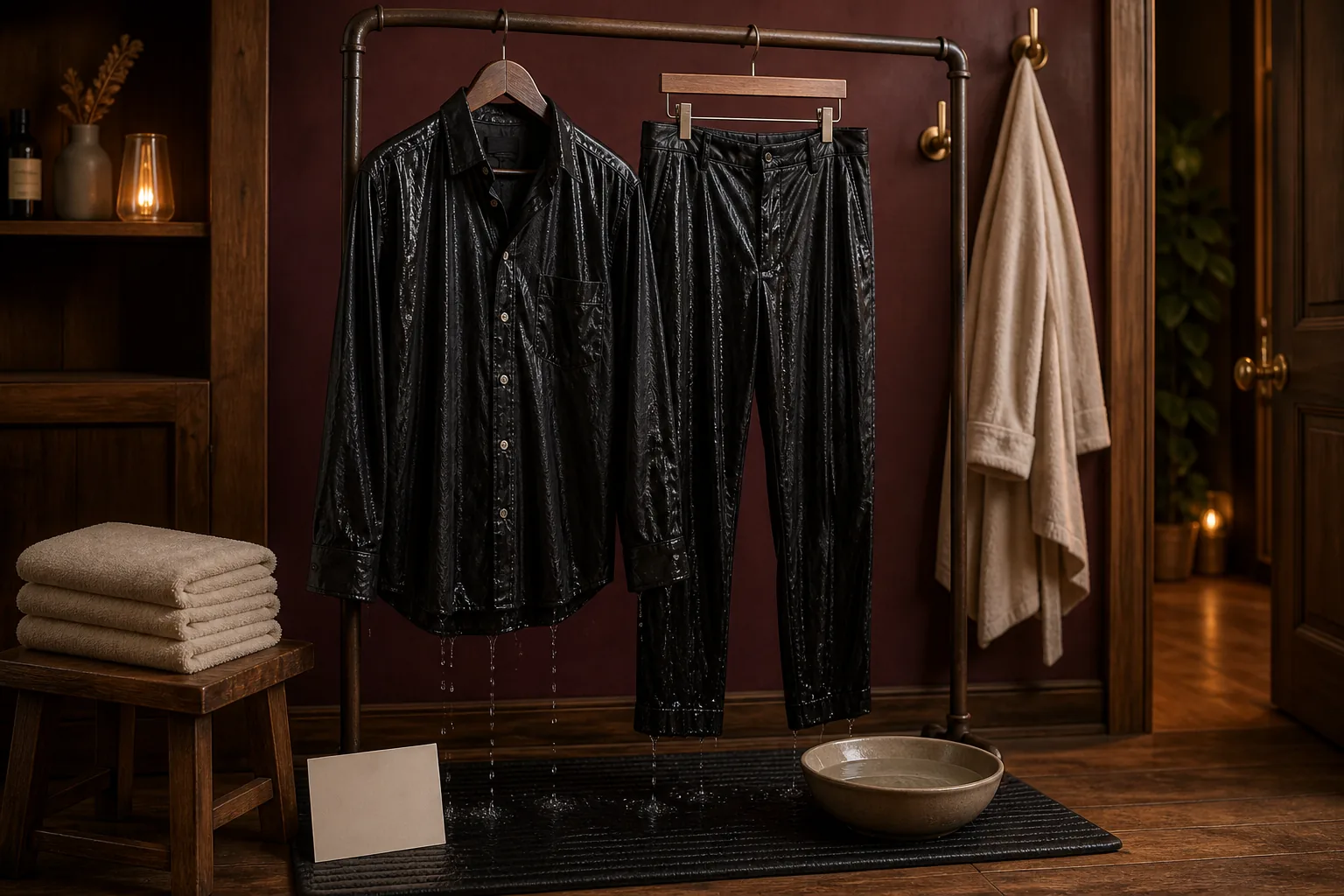
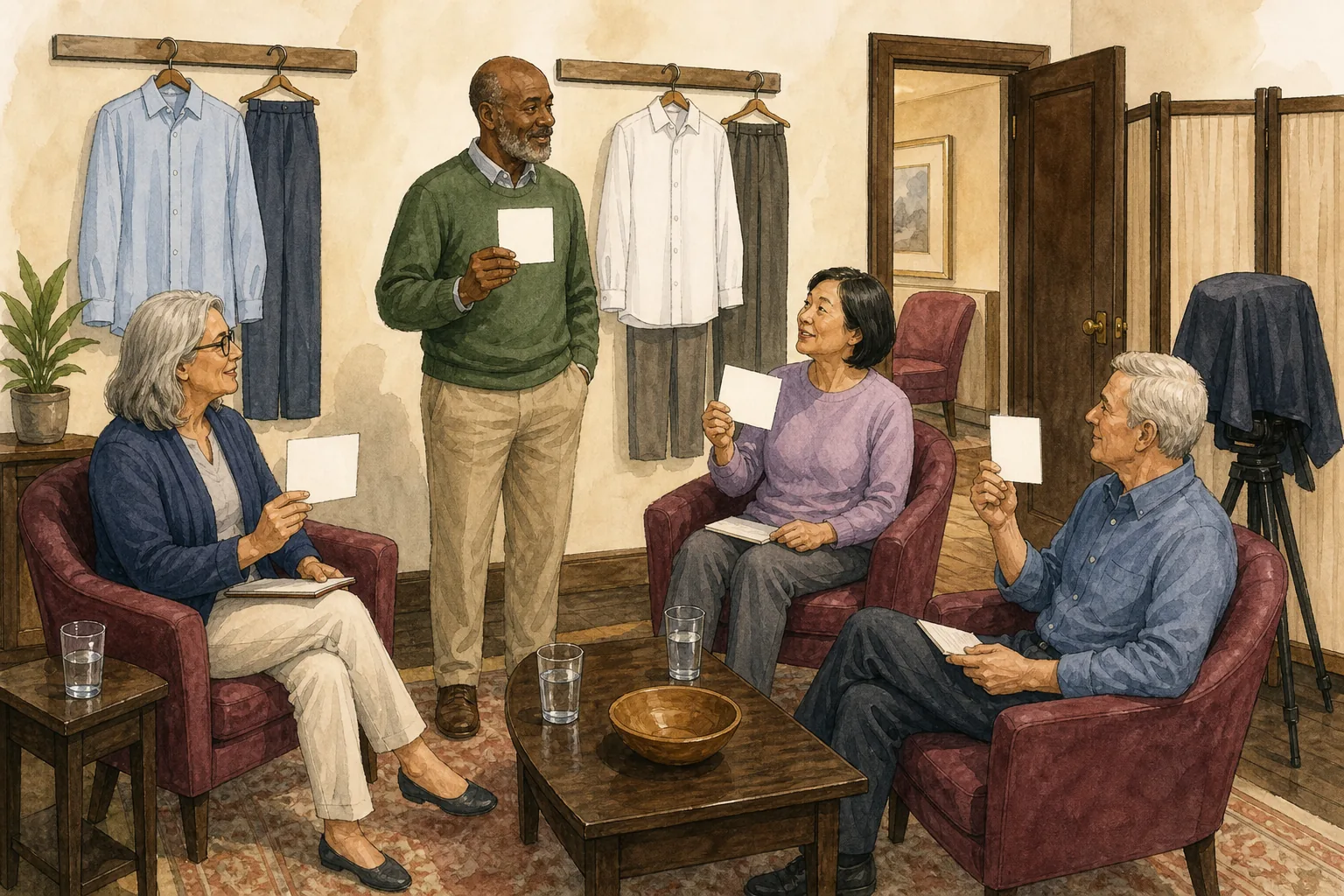
EDITORIAL ILLUSTRATIONWetness changes visibility and consent
Agree garments, temperature, location, photography and altered transparency separately. Public rain, pools and beaches do not turn bystanders into participants.
Illustration created using generative AI; not documentary evidence.
Status
Detailed editorial draft
Publisher
The UK Kink Guide
Reviewed
Structured draft present; individual review date not recorded
Evidence
3 cited sources · types labelled below
Jurisdiction
UK-focused general education
Read the rest: evidence, law, safety and sources
Wet-clothing fetish
Focused attraction to the visual, tactile or transformational qualities of wet garments.
Water-based play
A broader category involving water that may not centre on clothing.
Sploshing or WAM
Messy sensory play using substances or mixtures, with distinct allergy and cleanup issues.
Aquatic activity
Swimming or water sport requiring environment-specific competence; it is not implied by the fetish.
Weight, movement and entanglement
Test how a garment behaves without relying on it in deep water. Denim, layered fabric and long garments can become heavy, cling, snag and restrict joints or exit.
Keep away from drains, moving machinery, currents and underwater obstacles. Do not combine heavy wet clothing with restraint or impaired swimming.
Cold, skin and surfaces
Wet clothing accelerates heat loss. Stop for persistent shivering, confusion, slurred speech, clumsiness or unusual tiredness and move to warmth; suspected hypothermia is an emergency.
Change out of wet fabric, dry skin and address chafing. Clean water and slip-resistant surfaces reduce contamination and fall risks.
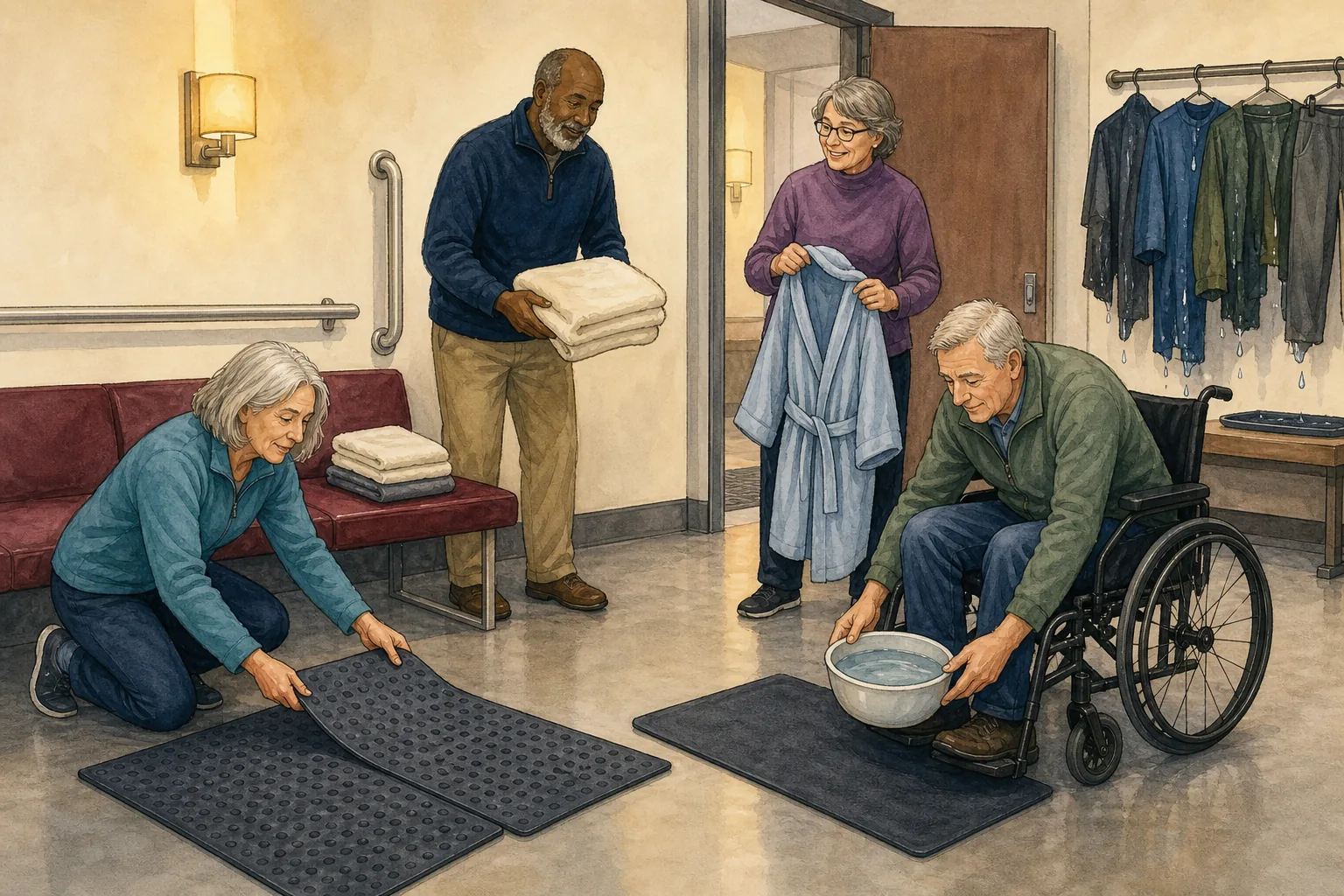
EDITORIAL ILLUSTRATIONCold, weight and surfaces matter
Wet fabric can become heavy, restrictive and cold. Keep a stable path, dry clothing and warmth available, and stop for persistent shivering, confusion, clumsiness or unusual tiredness.
Illustration created using generative AI; not documentary evidence.
Evidence and accessibility
Direct fetish research is sparse; textile and cold-water evidence demonstrates hazards but cannot establish prevalence or typical practice.
Spray effects, small fabric samples, warm shallow setups, photography or digital effects can preserve visual elements for people with mobility, sensory or temperature limitations.
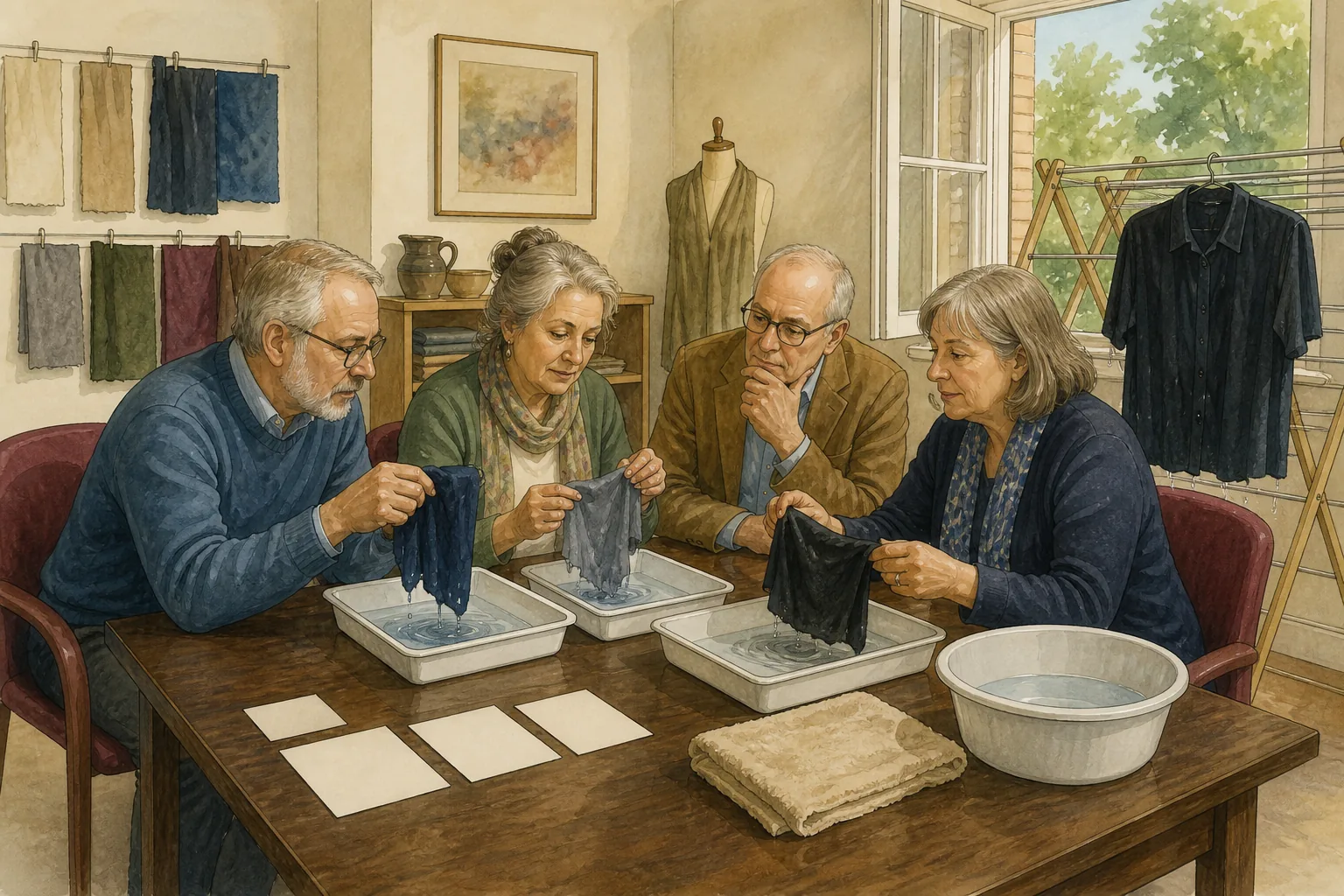
EDITORIAL ILLUSTRATIONSmall samples can preserve the visual idea
Fabric tests, spray effects, photography and digital effects can explore sheen and texture without deep immersion. General textile and cold-water evidence cannot define the fetish's prevalence or meaning.
Illustration created using generative AI; not documentary evidence.
Non-graphic examples
What the umbrella may include
Photographing a wet sleeve rather than full immersion.
Checking whether a pale garment becomes transparent.
Keeping dry clothes and towels nearby.
Avoiding long fabric around drains or currents.
Stopping after persistent shivering.
Prepare for an appointment
Questions you could ask a professional
What information would help you understand my question?
What are the realistic options and uncertainties?
How can disability, communication or privacy needs be accommodated?
When should the situation be reviewed again?
These prompts do not replace assessment and do not imply that every reader needs professional care.
Continue learning
Take the next step from definition to context.
Continue with independent guidance connecting wet-clothing fetish to evidence, consent, safety, uncertainty and practical decisions.