
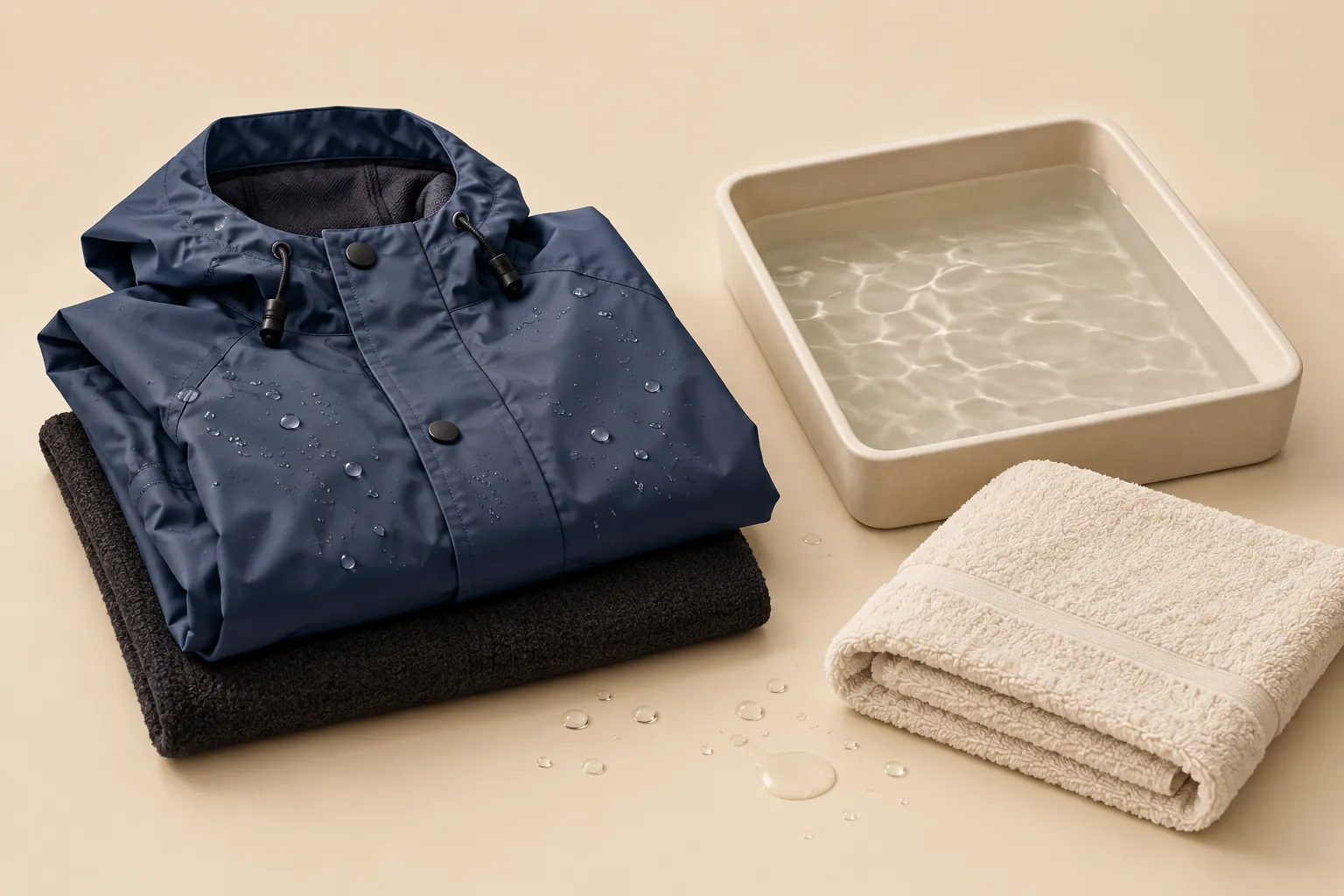
Wetlook usually centres the appearance or feel of damp or soaked clothing. It is distinct from covering someone in food or another substance, and consent to one does not imply consent to the other. Choose a garment that remains comfortable and easy to remove when wet, keep the floor safe, and plan warmth, privacy and drying before water is used.
What changes when clothing gets wet
Fabric can become heavier, cling to skin, stretch, turn more transparent or take longer to remove. Ask the wearer whether those changes are welcome. Test an ordinary garment with a small amount of water in a private setting before planning a larger effect. Do not assume an outfit will look or feel the same as it did dry, and do not use the person's surprise as the point of the activity unless that variation was freely negotiated.
Different fabrics absorb and release water differently. Read the care label to decide whether the garment is washable and how it should be dried. Delicate fabric, dyes, trims or leather-like components may be damaged by soaking. A costume may have closures that become hard to manage while wet. The wearer should be able to stop and change without needing to wait for another person's permission or physical help.
Temperature matters. A pleasant sensation at first can become uncomfortable as a garment cools. Keep a towel and dry clothes close, and stop for shivering, dizziness or numbness. A photograph or roleplay plan is not a reason to continue in a cold, heavy outfit. The messy play safety guide covers warning signs and cleanup for water and other materials.
Choose a garment for movement
Ask about the wearer's preferred coverage, transparency, fit and mobility. A top that clings when wet might feel too revealing, even in a private room if a camera or window is present. Plan where the garment will be removed and whether the person wants help. Avoid tight items that are difficult to pull off and anything that could cover the face or restrict breathing.
Footwear and surfaces deserve the same attention as the fabric. Wet socks can make a smooth floor slippery, and water can travel beyond the protected area. Keep the route to a bathroom or changing place clear. Use stable surface protection and inspect it during and after use; a loose mat can create its own hazard.
If the participant has sensory sensitivities, fatigue, a disability or temperature concerns, discuss those specific needs. A person may enjoy the sight of wet fabric but dislike the contact of it on skin. They could choose to watch, handle a sample or try a different texture. The disability and access guide encourages person-led adaptations rather than assumptions.
Privacy, photos and setting
Decide who can see the activity. A shared garden, an open window or an event venue changes the privacy picture. People passing by have not agreed to participate, and the wearer may not want a wet garment visible to them. Choose a private location and an exit plan that respects the participant's comfort.
Photography is a separate consent decision. Wet fabric can reveal more than the dry garment, and a background may identify a home. Discuss whether any image is wanted, what it shows, who may view it, and whether it will be stored or shared. A person can ask to stop recording or delete a file; an earlier willingness to pose does not grant permanent permission. The digital-consent guide covers this in detail.
If travel is involved, pack dry clothes and consider transport, weather and where a damp garment will be carried. A private activity can remain private without being hidden through a complicated story. Do not rely on a partner to provide the only route home if the person may want to leave early.
An easy first plan
Agree the garment, water amount, location, duration, stop phrase and cleanup responsibilities. Start with a small area of fabric rather than a surprise soaking. Check how the person feels before adding more water. Plain speech should always be enough to pause. If someone is quiet, cold or struggling to move, stop and ask outside any role.
At the end, offer a towel and a chance to change. Wash and dry the garment according to its label, clean the floor and check that no wet area remains for another resident. Ask what the participant enjoyed or disliked and whether a different garment would be more comfortable next time. A person can decide there will be no next time.
Wetlook can also be an aesthetic interest without a scene. Viewing a fabric, choosing a raincoat or discussing a look need not lead to wearing it. WAM and sploshing maps the vocabulary while keeping wet clothing distinct from other messy materials.
A small fabric trial
Take a garment the wearer chooses and check its care label, fit and likely visibility. Dampen a small part in a private, warm place and ask how the fabric feels. The goal is information, not an escalating challenge. Someone may like the colour change and dislike the weight, or enjoy a damp sleeve but not a soaked shirt. Stop at the point that suits the person rather than treating complete saturation as the endpoint.
Check what happens when the wearer sits, reaches and removes the garment. A closure may stick to wet fabric, a lining can hold water, and a sleeve may cling. Have a dry alternative beside the changing area. If the item is damaged by water, do not attempt to salvage the scene by swapping in another garment without agreement. Clothing choices are part of consent.
Privacy can shift too. A wet item may reveal an underlayer or body outline more clearly. Ask whether the participant still wants anyone else to see it and whether a camera stays away. A private plan should include the route to a bathroom, not just the space where water is used. Bystanders and housemates have not agreed to a display or a wet walkway.
Afterward, dry the person and the room, wash the garment as directed and ask what mattered. Was it the visual change, the coolness, the texture or the shared play? The answer can guide a next conversation without turning it into an obligation. If it was uncomfortable, a photo of fabric in a tray or an unworn raincoat might suit the interest better than wearing wet clothes again.
When fabric and body needs differ
Someone with sensory sensitivity might love the appearance of a raincoat but dislike cold water on skin. A person with limited mobility may need more time or a different place to change. A participant who cannot comfortably reach a closure may prefer to avoid that garment. Ask about the individual's needs, not a category label, and keep the exit usable without requiring another person's goodwill.
If wet fabric causes chafing, numbness or significant cold, stop and change. Do not interpret discomfort as a desired part of the scene without prior specific agreement; even then, a new symptom merits attention. A GP or NHS urgent service can advise on persistent symptoms. An educational guide cannot assess the cause or establish a safe time in wet clothing for everyone.
Respecting the limits of an image
A photograph may emphasise the visual effect and hide a person's discomfort, cold or difficulty moving. Agree whether the activity is for the wearer or for an image, and stop when the wearer wants to. Do not keep adding water to reproduce a picture. If an image is taken, the participant can set limits on framing, storage and later sharing. A photo that looks anonymous to one person may expose a distinctive garment or room.
The same care applies at an event. A venue may allow a wetlook outfit but the journey, queue or changing space may be unsuitable. Ask about facilities beforehand and carry dry clothes. A public dress code cannot compel the wearer to remain in damp fabric or pose for a camera. An ordinary outer layer can protect privacy and temperature on the way home.
If an unexpected spill happens, treat it as a practical accident rather than forcing it into the scene. Help the person move to a dry safe area, change if they wish and clean the floor. A previously agreed fantasy does not make every unplanned exposure welcome. Later, decide whether the interest is still worth exploring and in what narrower form.
Common questions
**Does wetlook require getting completely soaked?** No. The person may prefer a small damp area, a visual effect or no direct participation.
**Can any garment be soaked?** Check care labels, fit, closures and how the fabric behaves when wet. Some materials may be damaged or uncomfortable.
**Does a wet garment imply consent to photography?** No. Ask separately, especially because transparency and identifying details can change when wet.
**What if someone feels cold?** Stop, help them dry and change, and seek appropriate medical advice if symptoms are concerning or persist.
**Is wetlook the same as sploshing?** They overlap in some people's language, but soaked clothing and contact with other substances require different agreements.
When to get help
For persistent irritation, pain or symptoms after cold exposure, ask a pharmacist, GP or NHS 111 about the right route. Call 999 for severe symptoms or immediate danger. If images are shared without consent, the site's intimate-image reporting guide gives UK routes. If someone ignores a stop request, independent support can help. Definitions: wetlook, messy play, sploshing, digital consent and boundary.