
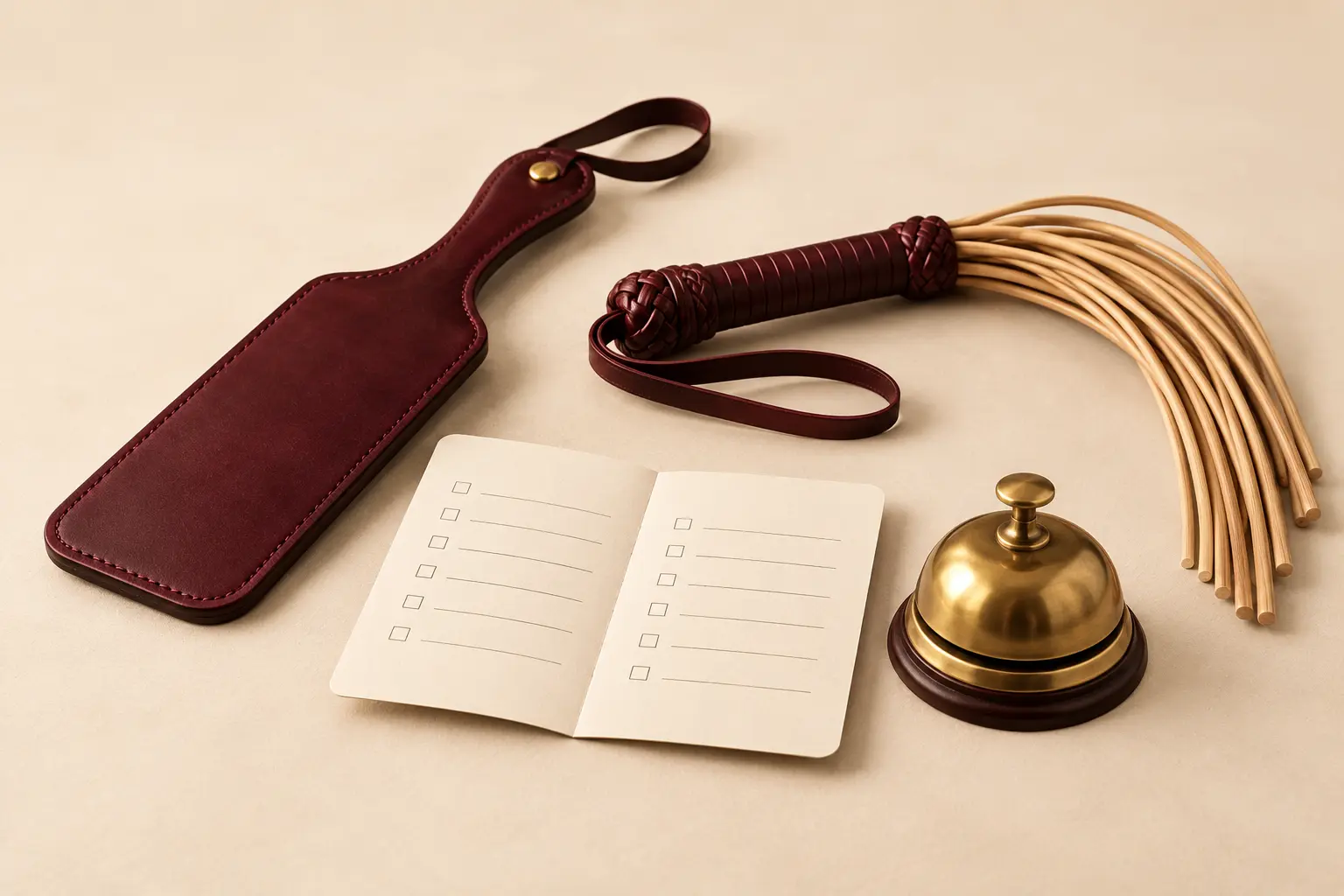
Two terms within impact play
Flogging commonly refers to a multi-strand implement in impact-play language. Caning refers to a cane-like implement or fantasy. Construction, contact and the likely consequences differ; neither word communicates force, experience or consent. Some adults are interested in appearance, sound, ritual or fiction without wanting impact at all. Ask what the term means to the person before treating it as a proposed activity.
Neither term is a step on a ladder from 'beginner' to 'advanced'. A person who enjoys spanking or a theatrical scene has not agreed to either. This guide gives no striking technique, body-area advice, force threshold or practice sequence. For the broader context and law, read impact play, marks and UK law. A short label cannot capture an individual body's vulnerabilities.
Specific consent rather than a category yes
Discuss whether the interest is fantasy, an object in a scene, or physical contact; these are different permissions. If contact is proposed, discuss the exact implement, expected sensation, clothing, marks, exclusions, privacy, communication and aftercare without assuming any of them. A person may decline caning while welcoming a different symbolic element. A D/s title or previous impact experience does not make a future yes automatic.
The CPS guidance for England and Wales says sexual consent is a free choice with capacity and freedom, can be conditional and may be withdrawn. This does not resolve every question about impact, which can involve separate injury law. An agreement should include the plain right to stop immediately and the expectation that either person will stop for concerning signs. Consent negotiation should be understandable outside the role.
Health and injury uncertainty
Impact can cause bruising, swelling, broken skin or deeper injury. A mark's appearance cannot reliably show the full extent of harm. Medicines, health conditions, prior injury and fatigue can change the response. There is no universal level of force or duration this guide can certify. Never use the absence of a mark as proof that a person is safe, nor a mark as proof that they consented.
Stop for unexpected pain, numbness, tingling, dizziness, confusion, unusual swelling, loss of feeling or broken skin. The NHS advises urgent help for severe bleeding, loss of feeling or serious wounds, and medical advice for signs of infection. Call 999 for an immediate emergency; use NHS 111 or a GP for other concerning symptoms. The medical-help guide helps sort care routes without diagnosing an injury online.
Marks and public consequences
Before any scene, ask whether a visible mark would affect work, sport, medical appointments, family privacy or personal comfort. A person can set a zero-mark boundary, but no one should promise that impact will leave none. Discuss how to respond if a mark appears unexpectedly. The wearer decides what to disclose. Do not photograph an injury without separate permission, and do not display it online as a badge of accomplishment.
A clinician may need an accurate account of how an injury occurred. You can use ordinary words to describe the mechanism and symptoms. If a doctor, employer or gym asks a question, the person with the mark should control their answer. Acas or Citizens Advice can advise on a specific employment situation. The marking guide distinguishes temporary symbols from bruises and injury.
UK law is not a safety certificate
The impact-play law guide explains R v Brown, CPS guidance, section 71 of the Domestic Abuse Act 2021 and differences across UK nations. Consent to sexual activity and consent to an injury are different questions. The legal outcome may depend on the nature and degree of harm, context, jurisdiction and law in force at the time. This page cannot determine whether a proposed or past act is lawful.
Do not tell someone that a safeword, contract or recording guarantees legal protection. A prior message may show a discussion but does not decide whether a person remained free and able to consent or whether injury law applies. For a particular incident, seek a solicitor and appropriate specialist support. This is legal information, not legal advice; it is deliberately non-instructional.
Make stopping credible
Agree ordinary words and an accessible non-verbal signal if speech becomes difficult, but do not wait for a signal when someone looks unwell or unclear. A person can pause for an emotional reason, a physical symptom or no reason. The person delivering impact should be able to stop without arguing or framing the pause as disappointment. Safeword systems help only when people respect them and stay attentive.
Do not combine impact with intoxication, impaired communication or a role that makes refusal unsafe. If one partner is worried about disappointing the other, talk about that before any scene. If a boundary is ignored, the issue is not that the person failed to negotiate precisely enough. Support and safety take priority over revising a checklist.
Aftercare and a later review
Ask what the person needs immediately: space, water, ordinary conversation or help with an injury. Do not apply products to damaged skin without appropriate advice. Watch for symptoms that develop later and seek medical care when needed. A good emotional check-in cannot treat a wound. Aftercare should be chosen by the participant rather than imposed as a ritual.
Later, compare expectations with what happened. Did the words flogging or caning mean different things to each person? Were marks, pain or privacy different from the plan? Hear concerns without insisting that the scene was consensual because someone did not stop earlier. A person can decide not to repeat an activity. The safest revision may be to keep a theme fictional or use a different form of connection.
How to evaluate a request without a demonstration
A proposed activity should be described in ordinary language, including what object is involved, what someone expects to feel, whether marks are possible and how they will stop. If a person cannot answer these questions without saying 'just trust me', the plan is not clear enough. Experience claims, online videos and retailer descriptions are not a personal health assessment. The site does not recommend training drills, body targets or implements. A reader can decide that the physical risk is not worth the desired meaning.
Some people are interested in the visual authority or sound of an object rather than impact. Naming that preference can open a lower-risk conversation, although any prop still needs appropriate handling and privacy. An interest in a fictional punishment theme does not grant permission for real punishment. If a partner says a rule violation requires caning or flogging despite refusal, the issue is coercion. A role may structure a scene only while everyone is free to leave it without consequences.
Physical symptoms may emerge after the encounter. Do not use a fixed waiting period or a comparison photograph to decide whether an injury is minor. Seek NHS advice for worsening pain, unusual swelling, numbness, infection signs or other concerns, and urgent care for severe symptoms. An emotional review can wait until medical needs are addressed. If an incident is disputed, avoid deleting messages or pressuring the injured person to give a particular account. Qualified legal and clinical professionals, not a community forum, are the appropriate sources for individual consequences.
Equipment descriptions are often written to sell an experience rather than explain injury risk. Words such as soft, beginner or controlled are not clinical categories. Even if an object appears familiar, it does not reveal how a particular body will respond. Consider the possibility of an unexpected mark, a delayed symptom and a change of mind before deciding whether the activity is acceptable at all. If the risk or legal uncertainty cannot be reconciled with someone's boundary, leave the physical aspect out. A theatrical idea does not require an impact. Someone who has experienced an injury should not be asked to reassure the other participant before receiving help. Keep records of symptoms for a clinician, and do not rely on a peer's anecdote about how a bruise looked. A later apology or debrief cannot change the need for assessment or the person's right to decline future scenes.
Common questions
Are flogging and caning the same? No; they are distinct terms with different construction and potential effects. Can an impact-play yes cover both? No. Ask specifically. Can you promise no marks? No. Does a bruise mean the scene was abusive? A mark alone cannot settle consent or law, and unexpected injuries need attention.
Is there a safe technique here? No. This guide intentionally contains no striking instructions. What if someone has numbness or swelling? Stop and seek medical advice; serious symptoms need urgent care. Does a signed agreement settle the law? No. Ask a qualified adviser about the relevant facts and UK nation.
UK routes to help
The NHS wound guidance and medical-help guide explain care routes. Use NHS 111 for urgent but non-emergency symptoms, a GP for ongoing concerns and 999 for an immediate emergency. Tell clinicians about the mechanism of injury so they can assess it. Do not delay help out of embarrassment.
If a person ignored your stop or you felt unable to refuse, Galop, Rape Crisis and the UK help directory offer confidential support. For law, use the UK law hub and a solicitor; the CPS source is for England and Wales, and other nations have different legal systems. A community rule cannot replace legal advice.