
Pet play means adult roleplay, never animals
Pet play is consensual roleplay between adult humans who adopt an animal-like persona or an agreed handler role. It may be private, social or part of adult intimacy, and never involves animals. A label does not specify an activity: discuss what appeals, what is unwelcome and how either person can stop.
People may use puppy play, pony play, kitten play or handler for a temporary persona, a relationship dynamic, a social identity or an imagined feeling. This guide is for adults aged 18 or over. No animal should be involved in an adult sexual or roleplay context. For a dedicated introduction to pups, handlers, headspace and community, read pup play: meaning, community and consent. The broader pet-play roles on this page remain distinct; someone interested in one need not want the others.
A label is not a script. One adult may enjoy a loose, playful persona; another may value ritual, training language, costume, movement or community belonging. Some prefer only fantasy or a photograph-free social setting. Others may dislike being called a pet at all while still enjoying an adjacent interest. Start with the person rather than the label: ask what part feels appealing, what feels silly or uncomfortable, and what they definitely do not want. Role-play is an agreed fiction, not evidence that someone has given up ordinary agency.
What is pup play?
Pup play is a form of adult-human roleplay in which a person adopts a playful puppy-like persona. It may be a private interest, a social identity or part of a negotiated relationship; it involves consenting adult people, never animals. Langdridge and Lawson’s research describes links with BDSM and leather communities and motivations that include play, self-expression, relationships and belonging. Its account does not establish one settled origin or prove that increased visibility means participation is growing.
Some pup communities take part in Pride and leather-scene spaces. For example, Pup Out London’s official Pride page describes a pup walking group. This is context about community visibility, not an invitation, verified future date or assumption about everyone involved. An adult may enjoy pup play without attending a public gathering, sharing their identity or taking a handler role. A parade, social meeting and private roleplay each need their own boundaries.
Gear is optional. Ordinary comfortable clothing, removable accessories and appropriate knee protection may be discussed in general terms, but appearance cannot show experience, consent or what a person wants. Ask before touch, photographs or using a role name in public. Choose clothing around comfort, heat, mobility and easy removal, and do not treat an accessory as a restraint rating. The rest of this guide explains communication and privacy without supplying an activity script.
Name the headspace without assuming a loss of choice
People sometimes use headspace to describe feeling playful, focused, less verbal, cared for, confident or temporarily distant from daily responsibilities. It is a personal description, not a medical state and not a reason to ignore communication. A person may still want ordinary words, eye contact, a phone nearby, mobility aids, hearing support or the ability to step straight out of role. Agree whether a persona has a start and end cue, where it applies, and who can be present. Do not treat quietness, wagging, crawling, imitation sounds or a costume as a substitute for an adult answer.
An out-of-role phrase is useful precisely because playful resistance or altered speech can make an ordinary concern hard to spot. Decide on a plain phrase such as 'out of role' and make it effective immediately. A safeword or accessible hand signal can add a quick stop route, but it is not the only thing to notice. Freezing, panic, pain, dizziness, a change in breathing or a withdrawn response should prompt a pause. The purpose of an agreement is to preserve a person's choices, not to make them perform a character more convincingly.
Make the agreement specific enough to use
Before a private or social plan, discuss the version of pet play each adult wants. Separate questions about names, commands, touch, clothing, movement, food or drink, photographs, messages, public attention and sleeping arrangements. A yes to ears or a collar is not a yes to kneeling, being led, being watched, being photographed or doing anything physical. Consent negotiation works best when it turns an attractive general idea into separate choices that are easy to decline. 'Maybe later' is not a commitment to experiment.
Also decide what remains entirely outside the role. Essentials such as medication, meals, sleep, mobility, work, money, contact with friends and access to help should never depend on obedience. A handler, trainer or owner title is fictional language chosen by adults; it does not grant authority over someone else's body, devices, accounts or everyday life. If a partner becomes angry when asked to clarify a rule, blocks someone from leaving, or uses role language in an ordinary conflict, stop treating that as play. The coercive-control guide identifies warning signs and support routes.
Gear is optional; comfort and removal matter
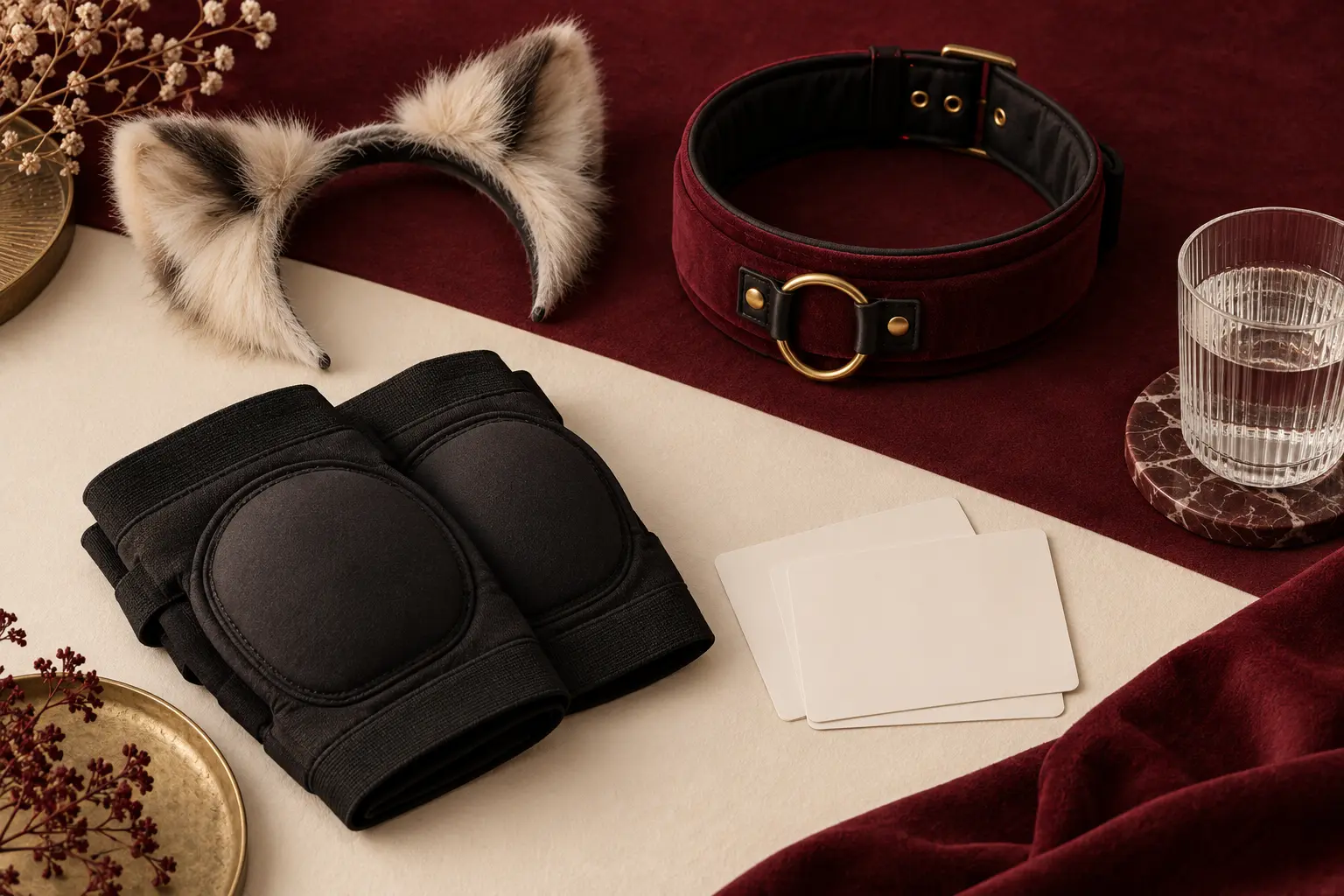
Ears, tails, mitts, hoods, collars, leads and knee pads can be symbolic, but none is required. Choose clothing or accessories that can be removed easily and that do not prevent a person from communicating, seeing, breathing, balancing, drinking water or using an ordinary exit. Do not infer material, fit or mechanical safety from a retailer image, a community trend or a costume label. A decorative collar is not load-bearing equipment, and a lead or tether should never create uncontrolled force at the neck. The product-safety guide explains why a product claim cannot replace a plan.
Kneeling, crawling, holding a position or moving on unfamiliar flooring can affect knees, wrists, hips and balance. The NHS advises seeking assessment for severe knee pain, an inability to bear weight, a badly swollen knee or a knee that is hot and red; do not turn a role into a reason to work through an injury. Build in ordinary seating, water, warm clothing and a way to change course. A disability, hypermobility, chronic pain, fatigue or sensory difference may call for a different expression of the fantasy rather than an endurance test. Accessible design is part of consent when it supports real choice.
Plan for heat, privacy and community spaces
Masks, hoods, layered clothing and active movement can make someone hot, thirsty or less able to notice their surroundings. Heat exhaustion can include tiredness, dizziness, headache, nausea, heavy sweating and fast breathing or heartbeat; the NHS advises moving to a cool place, resting and drinking fluids, with urgent help if someone has concerning symptoms. Do not use a costume or a desire to stay in role to postpone a break. A venue can be crowded, loud or warm even when the original plan was modest, so identify a quiet exit and agree that leaving early is a success, not a failure.
At a munch, club or community event, other people have not consented to being part of an adult scene. Check the organiser's current rules on costumes, photography, play, leads, changing space and accessibility. A visible collar or ears do not invite comments, touch, commands or a picture. Use a name and level of disclosure that feel safe, keep travel and contact details private until trust develops, and tell a trusted person where you are if that suits your safety plan. Munches are usually social meetings, not a promise that any roleplay will happen.
Check in after the role ends
Aftercare is simply the support each person wants after an intense, playful or vulnerable experience. One adult may want a blanket, food, quiet, a message the next day or nothing special; another may want to talk through what felt surprisingly emotional. Aftercare does not make a crossed boundary acceptable, but it can help people return to ordinary conversation and notice a concern that was hard to name in the moment. Ask rather than assuming that the person in a pet role needs care while a handler does not.
A later review can be brief: What felt welcome? What was unclear? Did the out-of-role cue work? Did the venue, gear or pace make communication harder? What should not happen again? Do not demand a positive review or persuade someone to repeat an activity to make it feel successful. If a person has felt pressured, humiliated outside the agreement, frightened to stop or unable to raise a concern, take that seriously outside the role. A community label is never more important than an adult's right to change their mind.
Choose a pace that leaves room for ordinary life. A role does not need to fill an evening, a relationship or an online identity to be meaningful. Some adults find that a short conversation, a costume-free check-in or a planned social event is all they want. Others prefer to keep the interest private. Agreeing to less, taking a break or deciding not to continue is not a lack of trust; it is evidence that the agreement can respond to the people actually involved.
Common questions
Does pet play involve animals? No. It is adult human roleplay and should never involve animals. Do I need gear? No; a conversation or a private imaginary role can be enough. Can an adult pet role mean someone cannot say no? No. Consent, ordinary refusal and access to help always apply. Are puppy and pony play the same? No; people use the labels in different ways, so ask rather than assuming. Can I wear ears at a social event? Only if the organiser permits it and it works for the venue; other attendees still have their own boundaries. What if kneeling or a hood feels uncomfortable? Stop, remove or change it, and seek health advice for a concerning symptom rather than trying to stay in character.
UK help
Call 999 for a life-threatening emergency, breathing difficulty, collapse or immediate danger. Use NHS 111 for urgent medical advice that is not an emergency; a GP or relevant clinician can advise on persisting joint pain, a skin reaction, fatigue or dizziness. If a partner will not accept a stop, controls access to care or isolates you, contact specialist support from a safe device. Galop supports LGBT+ people affected by abuse, while the National Domestic Abuse Helpline and Men's Advice Line offer routes for people of all genders.
For a difficult relationship conversation, Relate explains pressure and consent; it is not appropriate to use joint counselling when raising a concern could make a person less safe. A qualified practitioner listed by COSRT may help with sexual or relationship distress. For practical community questions, use organisers' own current information and the munch guide. This is education, not medical, legal or animal-care advice.