
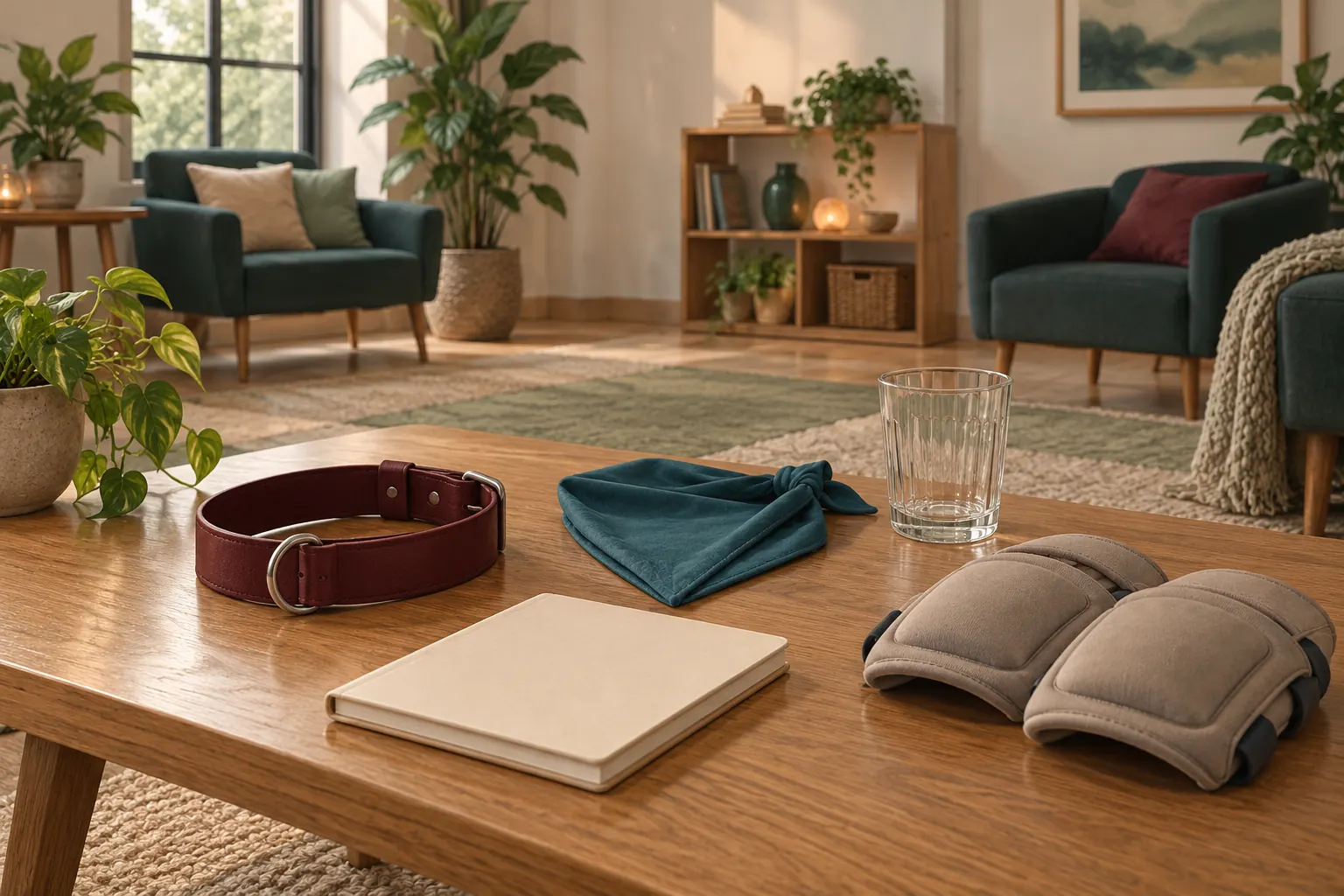
What pup play means
Pup play is consensual roleplay between adult humans in which someone adopts a puppy-like persona, sometimes with a partner called a handler. It can be playful, social or part of adult intimacy. It never involves animals. Agree boundaries, privacy and stopping beforehand; no costume, community label or role removes anyone’s right to choose.
The pup-play glossary entry introduces the term; pet play covers the wider family of adult roles. This page is for people aged 18 and over. Curiosity does not commit you to participating. Someone may like a persona, the community or the language without wanting a physical activity, relationship dynamic or sexual encounter. Ask what interests the individual rather than treating the label as a complete description.
UK researchers Wignall and McCormack describe pup play as adult roleplay and leisure as well as kink in their exploratory study. Its interview findings are accounts of particular participants, not a rule for everyone. They should not be turned into a diagnosis, a test of authenticity or a claim that the whole community behaves alike.
Pups, handlers and relationships
A pup is the adult choosing the persona. A handler is an adult taking an agreed supporting or leading role. These words do not establish ownership, permanent authority or permission to touch someone. A handler need not be a romantic partner, and a pup need not have a handler at all. Discuss whether the role applies only during a particular meeting or also has a place in the wider relationship.
Start with ordinary responsibilities: who checks the setting, how each person communicates, whether any contact is wanted and how the arrangement ends. Avoid making care conditional on obedience or claiming that a newcomer owes participation in exchange for introductions. Someone offering to guide you should welcome questions and accept a refusal without punishment. A title or confident manner is not proof of judgement, experience or trustworthiness.
A group may use pack language for friendship or belonging. That does not make its members entitled to private information or give its organiser authority over your other relationships. Decide what the words mean to you before accepting expectations attached to them. You can join a conversation without adopting a title, and leave a dynamic without needing another person’s approval.
Headspace without giving up choice
Headspace is a community word for a felt shift into the role: for example, becoming absorbed in playfulness or feeling less preoccupied with everyday demands. The university study describes relaxation among participants’ accounts. This is not evidence that pup play treats a health condition or that everyone will have the same experience. You do not need to reach a special mental state to belong.
Agree communication while everyone is comfortable speaking as themselves. A persona must never prevent ordinary words, questions or a request for help. If someone seems distressed, confused or unable to communicate clearly, stop and check their wellbeing rather than interpreting the response as part of the role. Feeling absorbed does not turn an earlier agreement into continuing permission.
Allow an unhurried return to ordinary conversation afterwards. Ask whether the language felt welcome and whether anything needs changing next time. The aftercare entry explains agreed support; it is not a promise that a difficult experience can be repaired by reassurance alone. Persistent distress deserves attention outside the dynamic.
UK LGBTQ+, leather and Pride communities
Pup play is visible within parts of UK LGBTQ+ and fetish communities, including spaces connected with leather culture. The early UK university interview study involved gay and bisexual men; its sample should not be mistaken for an eligibility rule. The Puppy and Handler UK organisation’s own community description, checked 15 October 2026, stresses diversity, including gender and disability. Its page is a community resource, not confirmation of a forthcoming event date.
Treat different communities as overlapping rather than interchangeable. A leather social, a pup gathering and a Pride parade may have different purposes, access arrangements and behaviour policies. Someone can value visibility while wanting privacy in another setting. Read kink and Pride for the debate about identity and public-event boundaries, without assuming that any one view speaks for every LGBTQ+ adult.
For a Pride appearance, check the current organiser’s clothing, conduct and photography rules. Membership of a private adult community does not mean passers-by have agreed to participate. Keep public expression appropriate to the event and its audience. Do not assume that last year’s photographs establish this year’s permissions or that another group’s appearance guarantees acceptance of your plans.
Gear is optional: breathing, heat and comfort
You do not need specialist equipment to discuss pup play or attend a social meeting where ordinary clothing is allowed. An outfit may communicate an interest, but it cannot communicate consent. Consider fit, skin contact, independent removal and freedom to speak and move. Do not buy something because another person says it is necessary to be taken seriously.
Avoid anything that restricts breathing, obstructs communication or traps heat. This guide recommends no head-covering equipment and gives no instructions for restrictive activities. The NHS heat guidance identifies dizziness, headache, nausea and heavy sweating among heat-exhaustion symptoms. Stop if you feel unwell; discomfort is not a test of commitment. Discuss existing health concerns with a GP before choosing activities or clothing that might aggravate them.
Ask about seating, changing space, step-free access and a quiet place to rest. Knee pads or comfortable clothing do not make prolonged pressure or an awkward position harmless. Choose participation around your own mobility and access needs rather than copying another person’s posture. A social conversation from a chair is just as valid as a more visible role.
Consent before the persona
Use ordinary language to establish what is wanted, unwelcome or still undecided. Discuss names, tone, touch, proximity, photographs and who may join a conversation or activity. The consent-negotiation entry and Yes, No, Maybe list can help organise a discussion without turning it into a contract. A curious answer is an invitation to talk, not permission to proceed.
Agree an accessible way to stop, and keep ordinary refusal effective at all times. A safeword can be an additional signal; it never cancels “no”, “stop” or signs that someone needs help. No role should require someone to stay silent about pain, fear or uncertainty. Do not continue because you think a refusal sounds playful.
Consider how alcohol, fatigue and social pressure affect the discussion. If anyone cannot make a clear, freely chosen decision, postpone participation. Agreeing to one person’s company does not agree to another person joining. Renegotiate outside the role whenever the plan changes, and accept that a person may simply prefer to end the meeting.
Privacy, photographs and online profiles
Discuss privacy separately from participation. Ask before taking a photograph, recording sound, using a real name, tagging an account or telling a friend. A person may welcome a private image but decline publication, or agree to attend a meeting while keeping their community identity separate from work and family. Background details can identify people who never agreed to be photographed.
Review account visibility and the information you disclose before joining a group chat. The ICO’s online information is a starting point for personal-data questions. A private group is not a guarantee against screenshots or forwarding. Avoid sending identity documents or intimate material just because someone presents themselves as a helpful established member.
If a photo or private detail is shared unexpectedly, keep a factual record where safe and ask about reporting and removal routes. Do not let a threat of disclosure push you into unwanted contact. The site’s intimate-images law hub explains image-specific law and support; an ordinary clothed community photo and an intimate image raise different questions.
Finding community safely
Begin with the kind of contact you want: a conversation, a non-sexual social meeting or an adults-only event. Read finding UK clubs, events and munches for regional searches and vetting. Check the organiser’s current information, age requirements, conduct policy, access arrangements and reporting contact. A search result or enthusiastic recommendation is a lead to investigate, not independent safety assurance.
Ask what newcomers can do without participating in activities, what clothing is required and how complaints are handled. Plan your travel home independently and avoid relying on a new acquaintance for your only route out. Tell a trusted person your plans if that is safe for you. You can attend briefly, stay at the edge of a conversation or decide not to go.
Be cautious about an organiser who discourages outside friendships, dismisses boundaries or expects disclosure before answering basic questions. If a concern involves someone influential, seek support outside their immediate circle. Community status does not remove accountability. The boundary definition applies as much to social contact and messaging as to private adult intimacy.
Common questions
Is pup play always sexual? No. Research describes both kink and leisure, and people may enjoy social belonging or a playful persona without sexual contact. Ask about the particular meeting instead of assuming its purpose.
Do you need a handler? No. The role is optional. Someone can explore the vocabulary, attend an appropriate social or identify as a pup without accepting another adult’s authority.
Is it only for gay men? No. Early research samples do not define who may participate. Check a group’s stated membership and inclusion policies rather than assuming that every space has the same audience.
Do you need an outfit or equipment? No. Check any event dress code, but do not confuse admission rules with a personal obligation to buy gear. Choose comfort and communication over expectations about appearance.
Can you stop while in the role? Yes, at any time. Real refusal always ends participation. An earlier agreement, a handler title or a role-based nickname does not override it.
UK help
For persistent pain, skin problems or a health condition affecting participation, speak to a GP. The NHS breathing guidance says severe difficulty breathing needs 999. Suspected heatstroke also needs emergency help. Explain symptoms plainly; you do not need to justify a community identity to seek medical care.
Galop supports LGBT+ people in the UK affected by abuse or violence on 0800 999 5428. Switchboard offers LGBTQIA+ listening support on 0800 0119 100. For relationship pressure, Relate’s guidance explains why unwanted pressure deserves attention; ask about suitable individual support if you feel unsafe. Call 999 for immediate danger.
You can seek help for distress without treating a consensual interest as the problem. Ask a GP about appropriate support and referral routes in your UK nation. A community organiser may help with an event complaint, but should not replace independent health, abuse or relationship support.